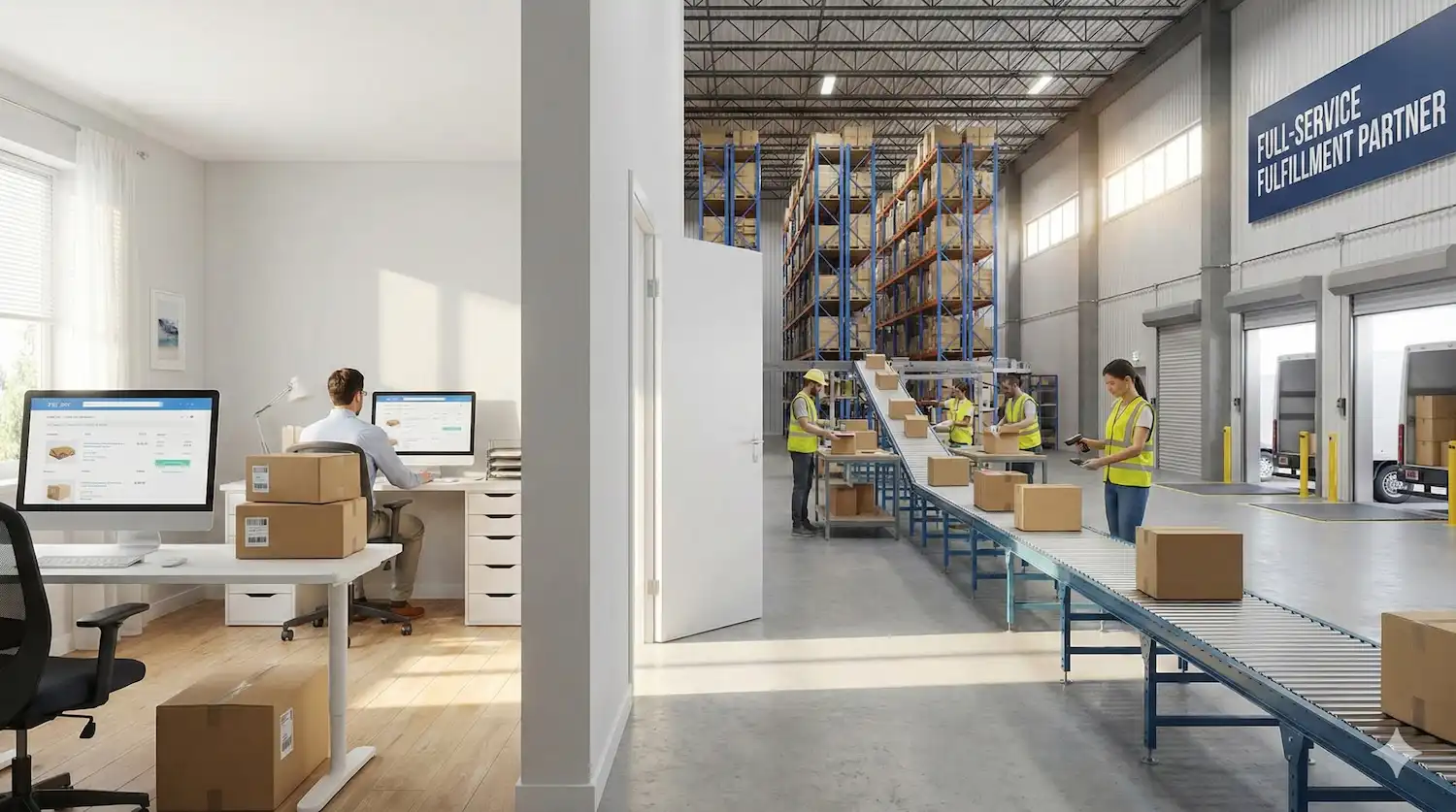
What is fulfillment?
Fulfillment is the process of managing all orders for an e-commerce business, from the moment a customer places an order on the website or online platform until the product is delivered to the customer, including the return process.
Simply put, every step that happens "back-end" of an online store, from receiving orders, picking products, packing, shipping, to tracking packages, is collectively referred to as... Order Fulfillment
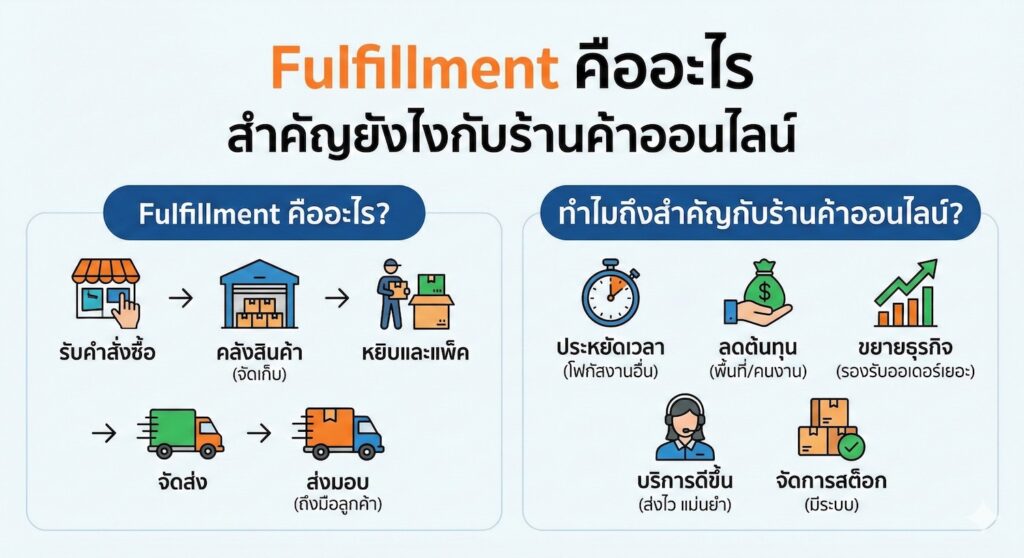
What are the steps involved in a fulfillment system?
The fulfillment system consists of 6 main interconnected steps:
1. Receiving goods into the warehouse.
The first step is to receive goods from suppliers or factories and store them in the warehouse. This involves counting the quantity, checking the quality, and accurately recording the information in the system.
2. Warehousing
Incoming goods are systematically stored in a warehouse or fulfillment center, categorized by category, size, or sales frequency, for easy and quick retrieval.
3. Order Processing
When a customer places an order, the system receives the order and processes it automatically, checks stock levels, confirms payment, and sends the order to the warehouse team to prepare for shipment.
4. Picking and Packing Products (Pick & Pack)
The team will pick the items according to the order list, verify their accuracy, and then neatly pack them, attaching the shipping label and necessary documents.
5. Shipping
The packaged goods will be handed over to a courier service such as Kerry Express, Flash Express, or Thailand Post for delivery to the customer.
6. Returns Processing
If a customer wishes to return or exchange an item, the Fulfillment system will support the process of receiving the return, inspecting the item's condition, and processing the refund or sending a new item.
Why is a fulfillment system important for online stores?
Many people might think that simply delivering goods to customers is the end of the process, but in reality, the fulfillment system impacts businesses in many dimensions:
Reduce operating costs.
An efficient fulfillment system reduces warehouse management costs, decreases staffing requirements, minimizes shipping errors, and lowers delivery costs by negotiating pricing with carriers for large volumes.
Increase delivery speed.
Today's customers expect fast delivery. A good fulfillment system helps products reach customers faster, whether it's same-day delivery or next-day delivery.
Create customer satisfaction.
Accurate and timely delivery, neat packaging, and a clear parcel tracking system build customer trust and encourage repeat purchases.
To support business growth.
As a business grows, the number of orders will increase. Without a good fulfillment system, problems such as delayed deliveries, incorrect orders, or inaccurate stock levels will arise, negatively impacting the business's reputation.
Reduce problems with lost and damaged goods.
A standardized fulfillment system has a verification process at every stage, reducing the chances of lost, incorrect, or damaged goods during shipping.
Give yourself more time to focus on sales.
Shop owners no longer need to waste time packing orders, making deliveries, or counting inventory themselves. They can instead focus their time on marketing, product development, and business expansion.
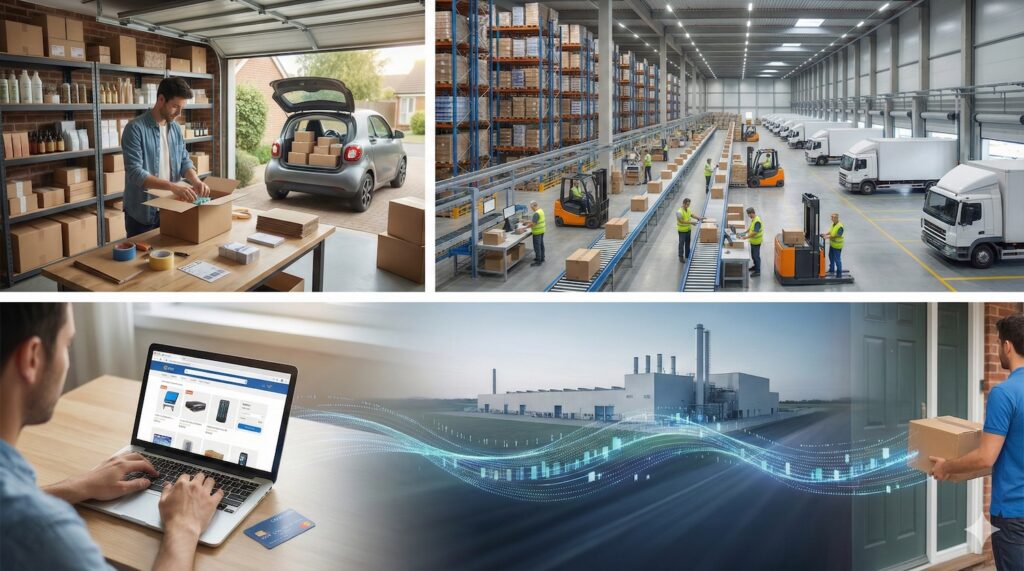
The types of fulfillment commonly used by online stores.
1. Self-Fulfillment (Managed by yourself)
The shop owner handles everything themselves, from warehousing and packing to shipping, making it ideal for small shops with low order volumes.
Suitable for: Newly established shops typically receive no more than 10-20 orders per day.
strength:
- We can control the quality ourselves.
- No additional charges.
- Adjustable and flexible
weakness:
- It takes a lot of time.
- It is difficult to expand the business.
- There needs to be storage space.
2. Third-Party Logistics or 3PL (using a third party's service)
Hire an outsourced company to handle all fulfillment, from warehousing and packaging to shipping.
Suitable for: Medium to large-sized stores with more than 30 orders per day.
strength:
- Save time and effort.
- Supporting growth
- I got a cheaper shipping price.
- There is a standardized management system.
weakness:
- There is a service fee.
- Less able to control quality.
- It requires relying on a third party.
3. Dropshipping
The store doesn't need to stock any inventory. When an order comes in, the supplier ships the goods directly to the customer.
Suitable for: Beginners with a limited budget want to test the market.
strength:
- No need to invest in inventory.
- No warehouse required.
- Easy to get started.
weakness:
- Low profit per item.
- Quality control is not possible.
- Long delivery time