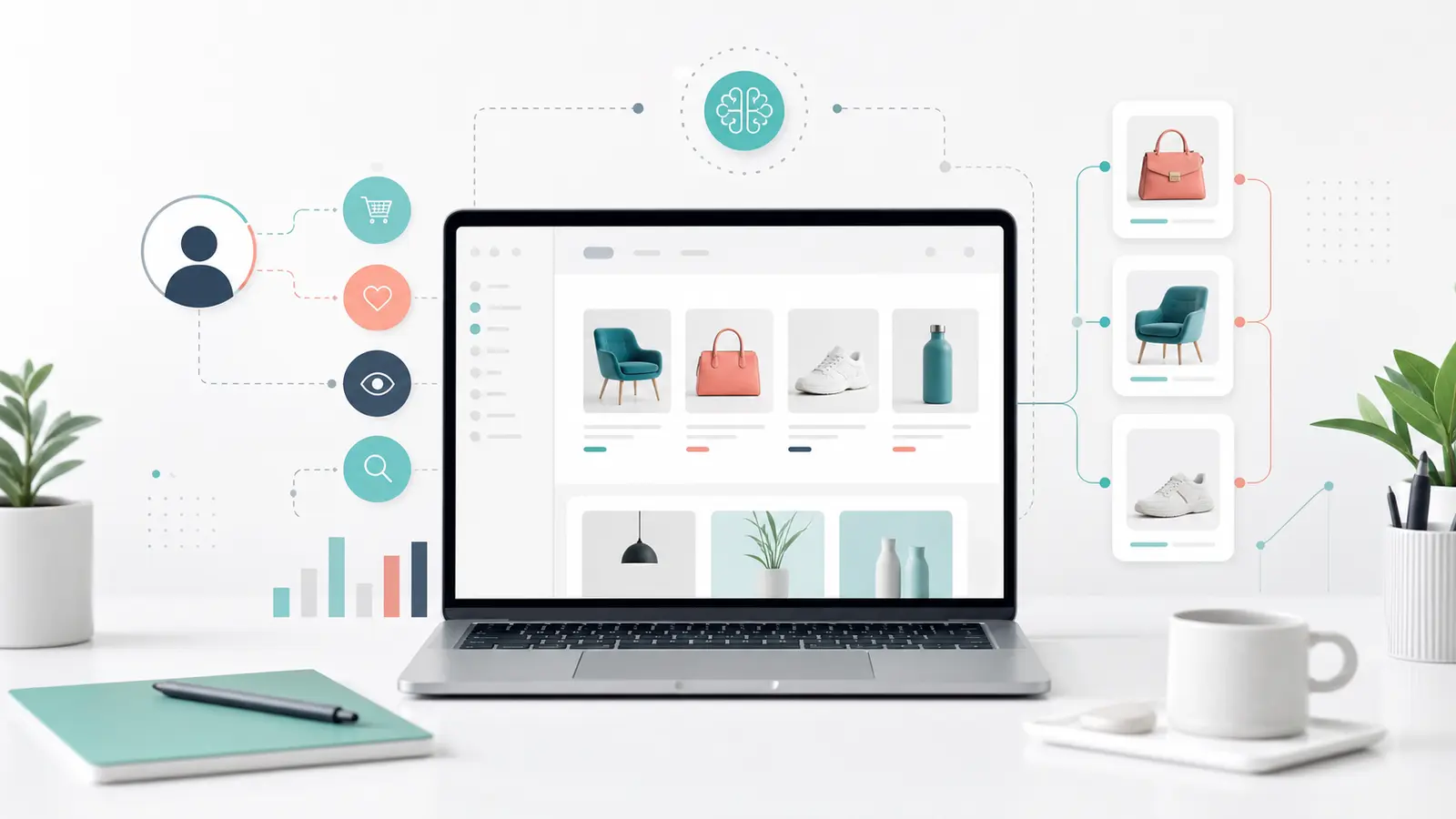
A good e-commerce website today isn't just about loading quickly, having a wide selection of products, or convenient payment methods. It needs to start "remembering its customers" at a deep enough level to help them make decisions more easily without feeling like they're being constantly pressured into buying something. This is why many brands are beginning to prioritize this. AI Personalization More so because it helps transform the experience from a typical online store into a shop that knows what each customer is interested in.
A simple example: a customer who has just viewed running shoes might not be shown the same shoe model repeatedly, but could instead open up related options such as running socks, running watches, water bottles, phone belts, or promotions on similar shoe models that they might find more appealing. If done well, customers will find the website easier to use, rather than feeling like they're being haunted by the system.
What is AI Personalization from an E-Commerce perspective?
AI Personalization It involves using customer behavior data and AI to personalize what customers see on websites or communication channels, tailoring it to each individual. This includes featured products, product ranking in categories, promotions, email messages, and notifications via LINE and push notifications.
In traditional systems, stores often determine which products should appear first, which promotions should be shown, or which emails customers should receive. However, more sophisticated systems consider multiple signals simultaneously, such as previously viewed products, frequently clicked categories, price ranges of interest, time of visit, devices used, and purchase history. They then tailor the experience to each individual customer.
Personalization isn't just about putting your name in an email.
Many businesses understand personalization as simply starting emails with "Hello, Mr./Ms./Mrs./Ms./Ms./Mr ...s./Ms./Ms./Ms./Ms./Ms
Things that AI helps to decide instead of relying solely on guesswork.
- Which product should be recommended next after the product the customer just viewed?
- Which categories should be promoted to the top of the homepage or the Category page?
- Customers are more likely to see discounts, free shipping, or bundle deals.
- What is the best time to send an email, LINE message, or push notification without being too intrusive?
- Which products are suitable for upsell or cross-sell in your cart?
The key is relevance, not hype.
Good AI doesn't necessarily have to make a website more complex. Sometimes, simply prioritizing the right products, removing irrelevant ones, or offering promotions at the right time of purchase can improve sales.
How does a system understand customer preferences?
The data used for AI personalization doesn't necessarily have to start with a large system. Most online stores already have basic data, it just may not have been systematically organized and used yet. Key data often comes from website behavior, such as product views, searches, clicks, adding to carts, wishlist entries, and purchase history.
For businesses looking to implement a serious system, structuring the website to support data from the start is crucial, especially for stores with many products, multiple categories, and price ranges, or those with frequent repeat customers. Custom E-Commerce This will allow for more flexible logic in product recommendation and data collection than with typical ready-made website templates.
Data that should be stored systematically.
- Product view: What products are customers viewing? How long are they viewing them? And do they view them again?
- Category interest: Which category is the customer particularly interested in?
- Search intent: Search terms that express your actual needs, such as "marathon running shoes" or "birthday gift".“
- Cart behavior: Added items and then removed them, or left items pending payment.
- Purchase history: What do you buy? How often do you repurchase? And what is the approximate value per order?
Even with limited information, you can start, but you have to start right.
Newly established stores don't need to implement full AI capabilities immediately. They could start with simple rules, such as showing running equipment if the customer views running shoes, suggesting similar models if the product price exceeds 3,000 baht, or displaying reviews and free shipping promotions if the customer returns to view the same item for the second time. These systems provide a good foundation for future AI development.
Arrange products in the Category page in a personalized way.
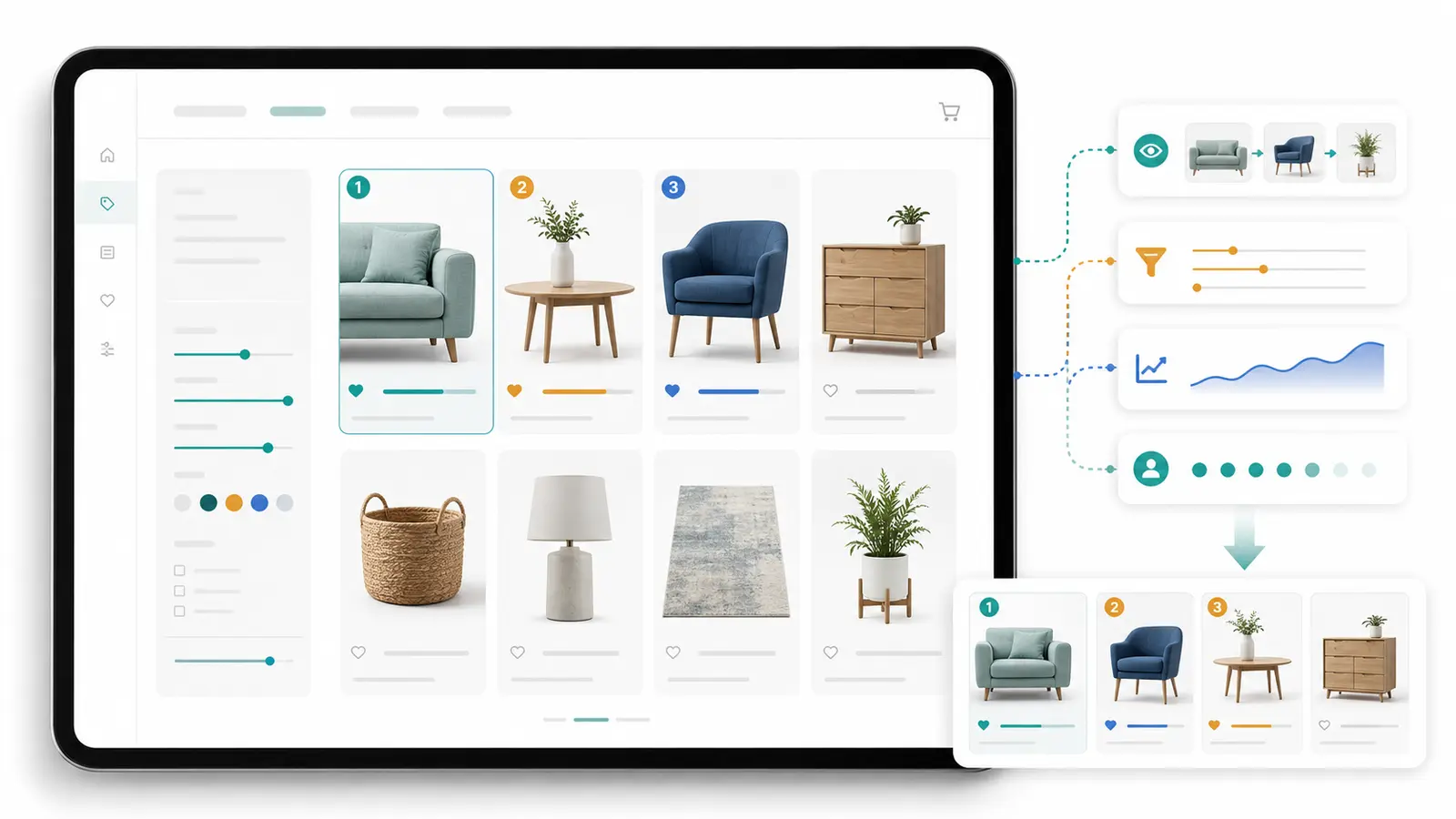
The Category page is often overlooked by many stores, yet it's actually a crucial decision-making point. Customers might all come to the "Shoes" category, but one might be interested in running shoes, another in fashion shoes, and yet another in discounted shoes. If everyone sees the same products listed, the chances of a customer finding the right item decrease.
AI can help sort products based on customer interests, such as previously viewed items, frequently clicked categories, preferred price ranges, preferred colors or styles, and purchase history. This transforms the category page into a personalized product shelf.
Examples of personalization arrangements.
- Customers who frequently browse running shoes tend to see running shoes and sporting goods as more prominent than fashion items.
- Customers who regularly buy a particular brand often see products from that brand or similar models first.
- Customers who like discounts are more likely to see promotions and more affordable products first.
- Customers looking at premium products often see the top model or bundle package first.
Caution: Avoid making customers feel pressured.
Good personalization should make selection easier, but also allow customers to discover other products. Therefore, the Category page should include both system recommendations and regular filters such as price, brand, size, color, new arrivals, and bestsellers, so customers still have control over their shopping experience.
Email, LINE, and Push notification promotions that aren't random.
Personalized promotions are another area where AI can greatly assist, because each customer responds to offers differently. Some are interested in discounts, some in free shipping, some want free gifts, and some are ready to buy if they see reviews or matching products.
Once the system understands customer behavior, sending emails, LINE messages, or push notifications won't be a random barrage of messages across the entire database. Instead, it will select messages based on timing. For example, customers who have viewed the same product multiple times but haven't purchased it might receive a message highlighting key features or a small promotion. Customers who have already bought running shoes might receive recommendations for socks or shoe care products a few days later.
The appropriate channel for different messages varies.
- Email is suitable for content that needs to be descriptive, includes product images, reviews, or multiple bundles.
- LINE is suitable for short messages, promotional offers, or notifications you want to see quickly.
- Push notifications are suitable for products that are back in stock, time-limited promotions, or short reminders.
Rhythm is more important than frequency.
If you send messages too frequently, customers may turn off notifications or unfollow. But if you send them at the right time, a single message can have more impact than a large, indiscriminate campaign. Therefore, AI systems should help consider both interests and timing, not just the products they want to sell.
Use AI to help with upsell and cross-sell.
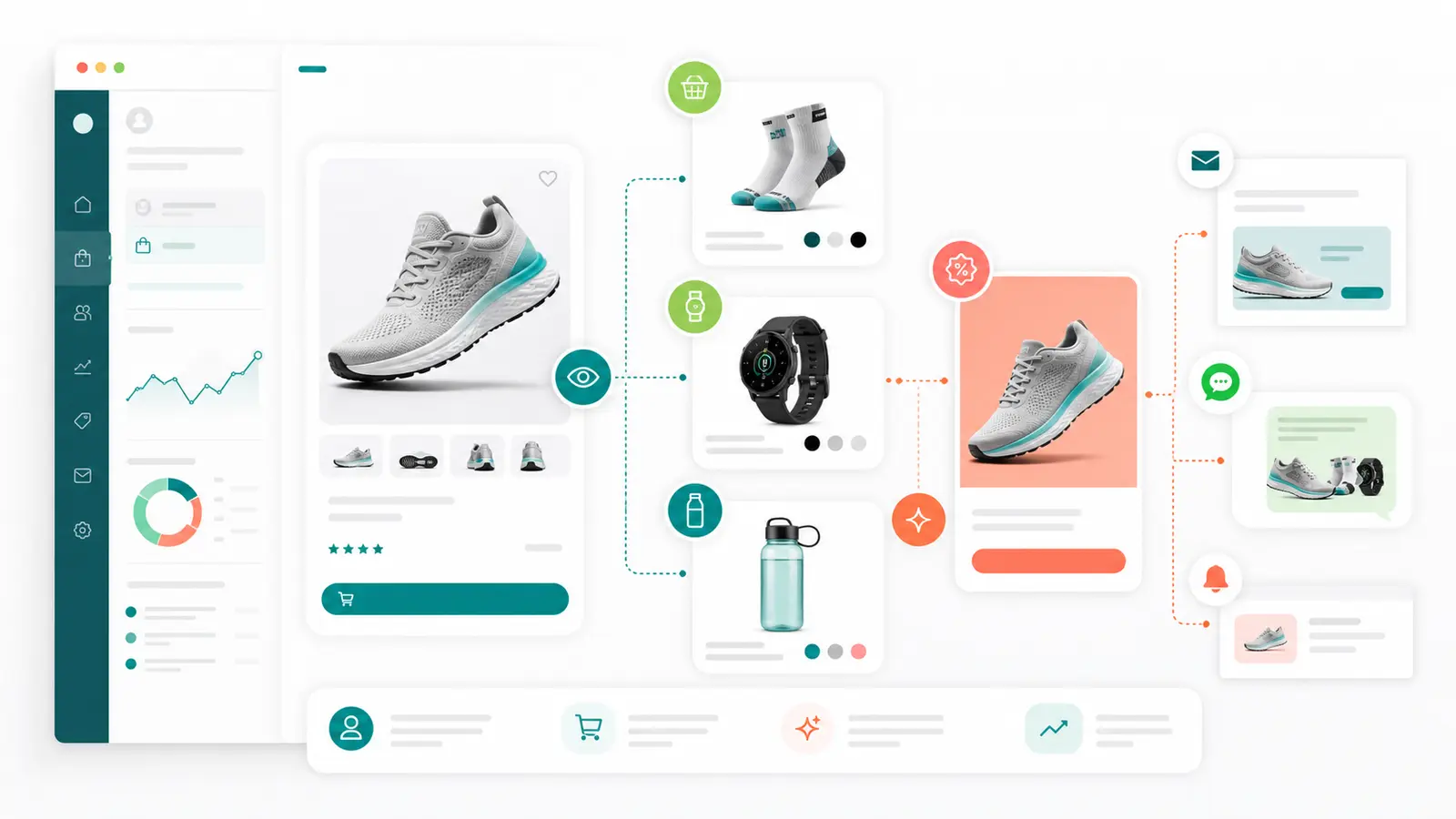
Increasing sales from existing customers is often more cost-effective than acquiring new ones, but it needs to be done in moderation. Introducing irrelevant products will be perceived as forced upselling, but recommending the right product at the right time, through upselling and cross-selling, can truly help customers find more suitable products.
For example, a customer looking at entry-level running shoes might have their choice of a more cushioned model as an upsell, along with running socks or a phone strap as a cross-sell. For customers who have already purchased shoes, the system might suggest accessories after the purchase, rather than immediately offering the same pair of shoes again.
This concept is related to the article... Cross-selling & Upselling This is because AI doesn't just add items to the cart, but helps select products that are relevant to the customer's actual behavior, making the recommendations more reasonable.
Areas where AI often helps boost sales effectively.
- Product recommendation box below the product page.
- Additional items in your cart.
- Bundles for products that are frequently purchased together.
- Special offer for customers who are hesitant or returning to watch again.
- Post-purchase emails recommending skincare products or supplements.
Don't let AI replace all brand sales.
While AI can help select products more effectively, brands still need to define guidelines, such as which products shouldn't be discounted, which should be promoted seasonally, which products have good margins, or which products require careful inventory management. Therefore, AI should be used to assist in decision-making, not to allow the system to sell everything without direction.
Where should a business start?
If a business wants to seriously pursue AI personalization, it shouldn't start by buying tools, but rather by asking a simple question: "Where are customers currently lost?" For example, are they having trouble finding the right product, adding items to their cart but not paying, making a one-time purchase and not returning, or receiving irrelevant promotions? Answering these questions will help you choose the most accurate first use case.
A practical starting point.
- Organize your products and product information neatly first.
- Implement event tracking to know what customers view, click, search for, and purchase.
- Let's start with rule-based recommendations in the key categories.
- Experiment with personalization on the Product, Category, and Cart pages.
- Integrate data with email, LINE, or CRM systems once the structure is ready.
- Performance is measured based on conversion rate, average order value, and repeat purchases.
What types of websites are suitable for AI personalization?
This is ideal for stores with a large product range, multiple categories, repeat customers, or products that sell as a continuous series, such as fashion, sports, beauty, IT equipment, baby and children's products, supplements, or B2B businesses that need to recommend spare parts and accessories.
For stores using Shopify or a system with an open API, the integration of product, customer, and campaign data can be further expanded, especially through the use of... AI helps boost online sales. To analyze behavior and help recommend actions that the sales or marketing team should take.
Measure the results clearly; otherwise, we won't know if AI is really helping.
The numbers to look at aren't just total sales, but also the conversion rate of those who saw the recommended products, average order value, click-through rate of recommendation boxes, repeat purchase rate, and revenue from emails or LINE that are directly personalized.
In summary: Modern e-commerce websites need to understand their customers more deeply.
AI personalization isn't just a fancy gimmick, but a way for e-commerce websites to understand their customers and sell more naturally. This includes everything from product recommendations and category layout to personalized promotions, upselling, and cross-selling tailored to actual customer needs.
Businesses that start setting up their data and systems today will have a competitive advantage. The cleaner the data and the better the customer journey design, the more AI can help their e-commerce website function like a sales team that truly understands each individual customer.
Want your online store to recommend products smarter?
Creative.co.th helps you set up your e-commerce system, from website structure and product data organization to API integration and AI personalization tailored to your specific business needs. If you want your online store to be more than just an online shop, but a system that systematically increases sales, our team is ready to design a practical solution, from the foundation to performance measurement.