
When we say a brand seems trustworthy, warm, fun, or premium, often that feeling arises even before we finish reading the message. Color is one of the fastest elements to work with because the brain perceives the overall atmosphere in seconds.
But choosing the right colors isn't just about asking, "Which color is pretty?" It's about the feeling the color palette evokes in the viewer, whether it suits the brand's personality, and how consistently it communicates its message across multiple channels. This article will explore practical principles for considering color palettes, emotions, and brand color control in a way that can be applied in real-world situations.
How do colors affect emotions? Why should brands care?
Color isn't just for decoration; it also helps define the tone of communication, much like the choice of words or photographs. Different color palettes can make the same content interpreted differently. A financial services website using dark blue and a lot of white space might convey a sense of stability, while a food brand using reddish-orange might appear more energetic and encourage quicker decisions.
Color works in conjunction with context; it doesn't work in isolation.
There's no fixed formula for the meaning of color. The same color can appear elegant or serious, depending on the shade, intensity, proportions, space, shapes, illustrations, and text surrounding it. Graphic design Therefore, good color theory involves viewing color as part of an overall system, rather than choosing it based on personal preference and then figuring out how to use it later.

The meaning of each color tone group: How to choose the right one for your goal.
Color charts can be a helpful starting point, but they shouldn't replace thinking about target audiences and brand positioning. A more accurate approach is to observe what kind of feeling each color group “tends” to evoke, and then adjust the shades to match the desired personality.
Warm tones: Energy, intimacy, and decisiveness.
Red, orange, and yellow.
Red and orange tend to draw the eye quickly, making them suitable for areas requiring a strong impact, such as important buttons, promotions, or brands wanting to appear vibrant. Yellow, on the other hand, conveys a friendly and optimistic feeling, but using it too much can lead to work fatigue and distraction.
Cool tones: Confidence, calmness, and balance.
Blue, green, and purple.
Blue is often used to convey professionalism and trust. Green is associated with balance, nature, and health, while purple ranges from creativity to premium, depending on whether a vibrant shade, a muted tone, or other colors are chosen.
Neutral tones: Breathing space and subtlety.
White, gray, black, beige, and brown.
Neutral colors help organize an image, highlight the primary colors, and subtly control the atmosphere of the work. White and light gray create a clean look, black adds weight and sharpness, while beige and brown create natural warmth.
Observations regarding culture and target audience.
Interpretations of color can vary depending on age, industry, and cultural context. Therefore, brands should test with people closer to their actual customers, rather than relying on a single, predefined meaning.
How to set up a brand color scheme so that the team uses the same colors every time.
Once the emotional direction is established, the next step is to translate that feeling into a system that the team can actually use. Because brand colors aren't just in the logo; they must be present on the website, in advertising, on social media, in print, in presentations, and in all other materials that customers see.
If the brand has a strategy. Corporate Identity (CI) Clearly, this makes it easier for everyone to decide which colors to use and when, reducing the problem of individual pieces looking like they're from different brands.

1. Start with the brand's core personality.
Try choosing 3-5 words that convey the feeling you want people to have when they encounter your brand, such as calm, friendly, bold, or meticulous. Then, eliminate conflicting words and select a color that best reflects your core personality. This method helps reduce the chances of choosing colors based on trends or personal preferences.
2. Define the function of each color completely.
Primary colors, secondary colors, accent colors, and neutral colors.
- Primary color: Colors that people should remember as representing the brand.
- Secondary color: Colors that enhance mood and expand arrangement options.
- Accent color: Use colors for key elements, such as buttons or information you want to draw attention to.
- Neutral color: Background color, font, lines, and white space all contribute to readability.
Don't let every color be the star at the same time.
If every element uses the same bright color, the work will lack visual flow. Accent colors should occupy just enough space to create contrast and be used only in areas you want the user to make a decision or remember.
3. Specify the color value and examples of use.
A color guide should specify at least HEX, RGB, and CMYK, along with examples of background colors, text colors, button colors, hover states, and color pairings that should not be used together. Having visual examples helps reduce misinterpretations between the design team, marketing team, and website development team.
Test your brand colors at every touchpoint before actual use.
A palette that looks great on a mood board might look inaccurate on a mobile screen or when used as a keypad, so it's best to test the colors in real-world situations from the start, especially for work. Website UX/UI Design Consideration must be given to aesthetics, readability, and user-friendliness.
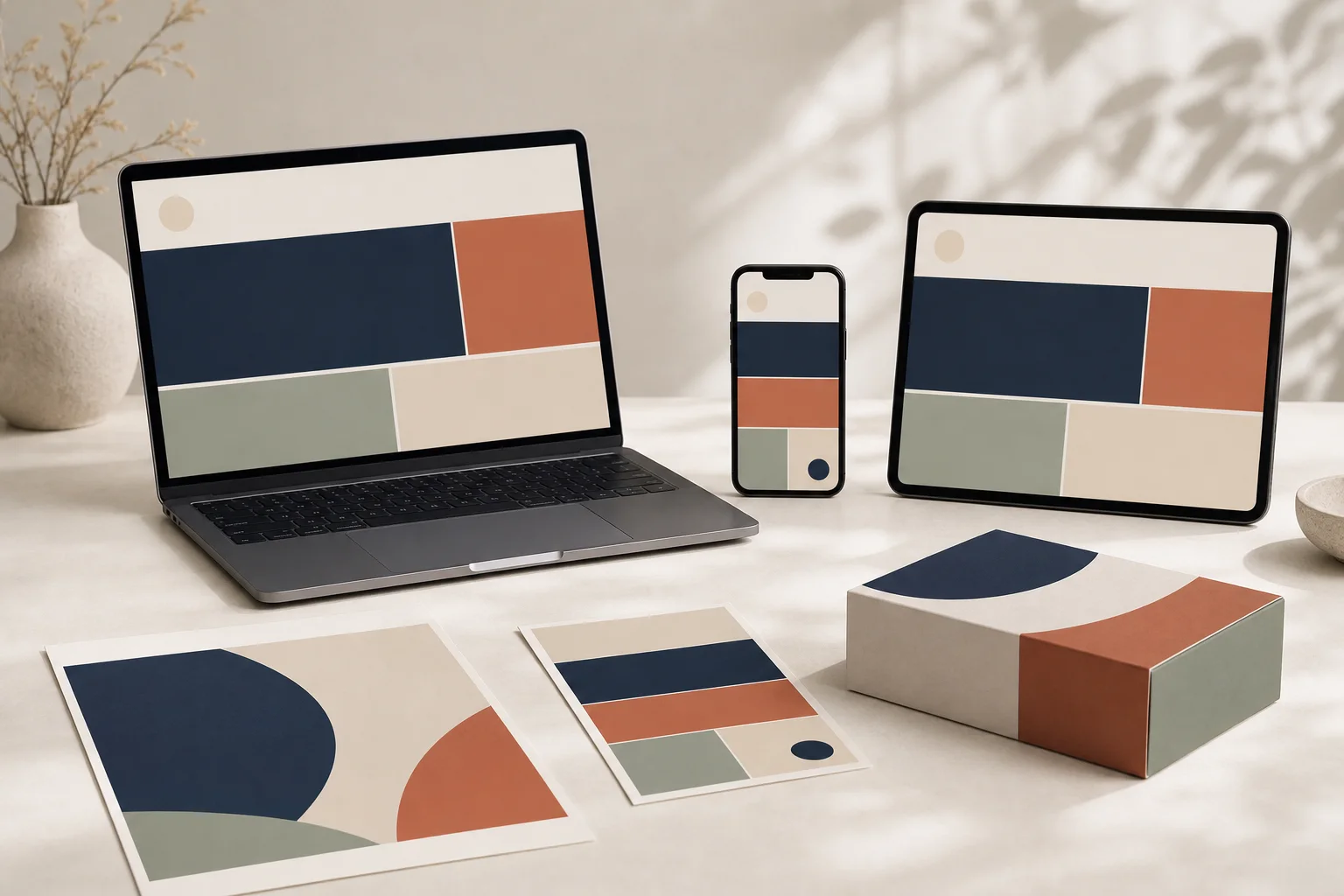
Examine both the feel and the usability.
In addition to checking if the design reflects the brand, you should also check the contrast between the text and the background, the clarity of the buttons, the difference between the normal and pressed states, and the display quality on different screens. Beautiful colors that make the text difficult to read are not ideal.
Try using it on a small project first.
Starting with a sample website page, a series of social media posts, and a basic document will help you quickly see if the color palette is flexible enough. If changes are needed, do them now before producing large amounts of media.
Checklist for choosing color tones that match the mood and brand.
- Clearly state the feeling you want customers to experience from your brand before choosing a color.
- Look at competitors to understand the overall market picture, but you don't necessarily have to use the same colors.
- Define primary, secondary, accent, and neutral colors, along with the function of each color.
- Use accent colors only when necessary to control the visual flow.
- Check contrast and readability on multiple screen sizes.
- Test colors on websites, social media, and print media before using them in real life.
- Record the color values and samples in the manual so that all teams can use the same ones.
Common mistakes made when choosing colors based solely on personal preference.
Common problems include using too many colors, such as using bright colors everywhere, making it difficult for the eye to know where to look, or choosing colors that look great in presentations but are difficult to read on a real website. Another case is different teams tweaking shades little by little, resulting in the brand having multiple variations of blue or green, lacking consistency.
Controlling color doesn't mean making work rigid or monotonous. On the contrary, a clear system allows the team to create new work more flexibly because they know where to experiment and which elements should be maintained to ensure brand recognition.
Change the color scheme to create a memorable and practical image.
If you're starting a new brand, updating your image, or want your website to convey a more accurate message, Creative can help you develop an overall direction, design a color scheme, and implement it in real-world scenarios so that all elements are consistent.