Many shops start selling on Shopee or Lazada because it's easy to open a store, customers are already on the platform, and they don't have to build their own system from day one. However, after selling for a while, the same questions often arise: fees are increasing, price competition is fierce, customers don't remember the shop, and most customer data isn't in their possession.
This article isn't saying you should stop selling on the Marketplace immediately, because for many businesses, the Marketplace is still a very good channel. Instead, it invites you to take a closer look at why... Online shopping website How is selling your own brand different from selling on a platform? If you're already selling on Shopee/Lazada and want to start your own brand, where should you begin?

- Advantages of a Marketplace
- A downside of Marketplaces that growing stores need to be aware of.
- The advantages of having your own online store.
- Long-term costs: What's truly cheap and what's truly expensive?
- Collecting customer data and repeating sales.
- Creating branding that makes customers remember your store.
- Where should I start if I'm already selling on Shopee/Lazada?
Advantages of a Marketplace
Marketplaces offer undeniable advantages, especially for businesses just starting out online or those without their own technical team. The platform handles many aspects, from shopping carts and payments to shipping, reviews, and major monthly campaigns. This allows businesses to focus more on products, pricing, and customer support.
Start selling early, and there were already customers walking past the store.
If you start your own website from scratch, you have to generate all the traffic yourself. However, on a marketplace, there are users searching for products every day. This advantage gives new stores a better chance of getting orders faster, especially for products where customers compare prices and read reviews before buying.
The basic system is ready for use.
Shops don't need to create their own membership system, payment system, or parcel tracking system. They just need to list products, manage images, descriptions, prices, and stock levels effectively, and then start receiving orders. This is ideal for shops that are testing the market or are unsure which products will sell best.
Suitable for product testing periods.
If you're still in the process of finding your main product, a marketplace can help you test the market quickly, see real sales figures and reviews, and find out what customers frequently ask. This information can then be used to design your own website more accurately.
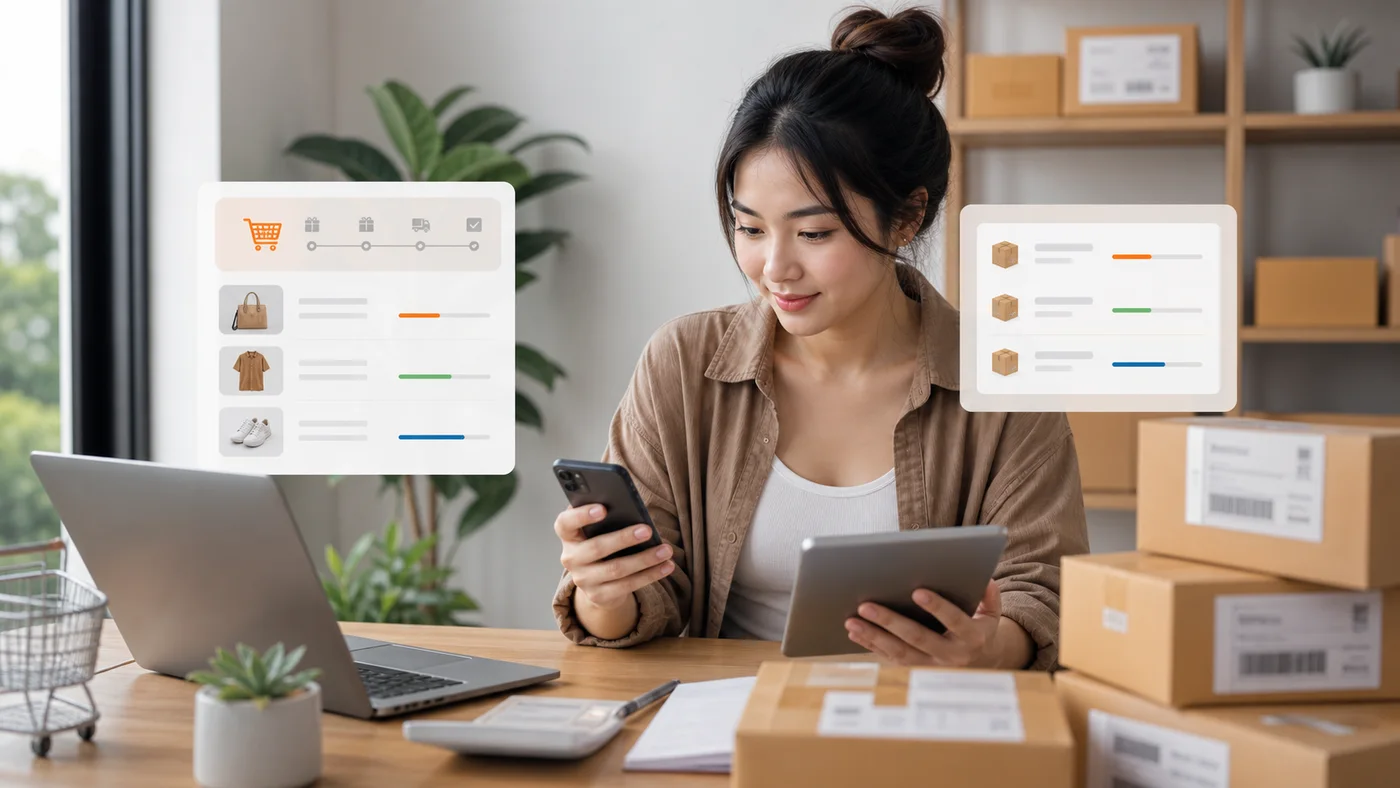
A downside of Marketplaces that growing stores need to be aware of.
The problems with marketplaces often don't arise on the first day, but rather when stores start receiving more orders. Sales may look good, but true profits can be eroded by fees, advertising costs, discounts, and price competition with similar products. The more similar the products, the faster customers compare them and the less likely they are to remember brands.
When the rules change, the shop must adapt.
Stores do not own the platform, so they must accept ever-changing terms and conditions, including GP fees, product visibility, campaign terms, ranking, and content requirements. This article... Marketplace Thailand and its low GP (Gross Profit) margins provide insight into why retailers are starting to look for more alternatives.
Customers remember the platform more than the store.
Many customers remember which app they purchased from, but can't recall the store name because most of the experience occurs on the platform, from searching and payment to notifications and reviews. Therefore, stores need to put in more effort if they want customers to return and purchase directly from the brand.
The advantages of having your own online store.
Having your own website gives you more control over everything from brand image and content to the order process, promotions, and customer data collection. You don't have to compete on a page with rival products lined up next to you, and you can tell your brand story to customers beyond just focusing on price.
Allows for more detailed control over the customer experience.
On their own website, stores can design the homepage, category pages, product pages, and checkout pages to match customer behavior. For example, they can recommend products based on problems, create product bundles, include long reviews, write informative articles, or create landing pages for specific campaigns without being limited by the platform.
The system can be further developed to suit actual business needs.
Some stores don't just need a shopping cart; they might also need wholesale pricing, a reseller system, exclusive coupons, VIP membership, pre-orders, or warehouse connectivity. If you start having this kind of workflow, your own website or service will be ready. Custom E-Commerce It would be a better solution than a ready-made platform.
Websites don't always replace marketplaces.
A successful approach for many stores is to use marketplaces as a channel to acquire new customers, and then use their own website to build trust, retain repeat customers, and run more cost-effective campaigns.

Long-term costs: What's truly cheap and what's truly expensive?
While marketplaces may seem cheaper at the start because they don't require website construction investment, the long-term costs come in the form of fees, advertising, discounts, campaigns, and the profit margin needed to keep products visible to customers. Owning your own website, on the other hand, involves initial and maintenance costs, but the cost per repeat purchase may decrease as the brand develops its own customer base.
Don't just look at sales figures; you need to look at the gross margin after channel costs.
Successful stores on online platforms should clearly show their profit after deducting GP fees, advertising costs, shipping fees, discounts, and operational expenses. This should be compared to bringing customers to their website directly through SEO, LINE OA, email, or direct website advertising.
Your own website needs a maintenance budget.
A website isn't a one-time project. It requires a budget for hosting, system updates, backups, security, and optimizing website pages based on real-time data. Thinking about these aspects from the start allows for better planning and prevents surprises when website traffic or sales begin to increase.

Collecting customer data and repeating sales.
Customer data is where a website's business has a clear advantage. Businesses can see which pages customers visit, what products they're interested in, what they repurchase, where they exit the page, and how they respond to promotions. This data helps businesses implement more accurate CRM, remarketing, email, LINE OA, and repeat purchase campaigns.
On marketplaces, the data is often not deep enough to build relationships.
Platforms provide only the necessary information for sales within the system, but stores often don't get the complete long-term picture of their customers. Having their own website allows stores to gradually build a brand-specific database and use that data to tailor products, content, and promotions more precisely.
Data that should be collected on the web.
- Products that customers view frequently and products they repurchase.
- Channels that bring customers to buy include SEO, ads, social media, or LINE.
- Pre-purchase questions, reasons for not buying yet, and products often purchased together.
- Target customer groups for specific promotions include existing customers, wholesale customers, or agents.
Creating branding that makes customers remember your store.
If a store wants to avoid competing solely on price, branding is crucial. Having your own website allows the brand to tell its story: what it believes in, how its products differ from competitors, what genuine reviews it provides, and why customers should choose it—not just because it's two baht cheaper.
Memorable brands often have their own space.
Stores with well-designed websites often appear more professional to customers, especially for products requiring trust, such as beauty, health, specialized equipment, high-value goods, or B2B transactions. Customers might find products on marketplaces first, then check the website to verify the brand's legitimacy.
Content helps brands sell without constantly lowering prices.
Articles on how to choose a product, in-depth reviews, user manuals, and frequently asked questions help customers understand products and make better decisions. For more perspectives, see the article... Shopee Lazada The e-commerce website itself explains why stores shouldn't put everything on a single platform.
Where should I start if I'm already selling on Shopee/Lazada?
There's no need to start with a big website right away. Stores already selling on marketplaces should begin by reviewing their existing data to identify their best-selling products, frequently asked customer questions, review highlights, and which product categories deserve dedicated pages. Only then should they design a website that supports actual sales, rather than simply creating a beautiful website without a plan to attract customers.
A practical starting point.
- Choose products or categories that are profitable and have repeat customers.
- Prepare product images, reviews, frequently asked questions, and brand selling points.
- Create a measurable e-commerce website or landing page.
- Integrate communication channels such as LINE OA, Pixel, Analytics, and email systems.
- Continue using the marketplace, but gradually introduce your brand to customers.
Start small, but lay the foundation so it can grow.
Your first website could start with a few main product categories, a basic order system, and SEO articles that answer customer questions. However, it should be structured to be expandable later, such as adding more products, categories, members, agents, or integrating backend systems.
Summary based on a conversation between shop owners.
Marketplaces are ideal for starting sales and acquiring new customers, while online stores are better for building a customer base, collecting data, establishing a brand, and reducing long-term dependence on one platform. The strongest stores usually don't choose one over the other, but rather understand the function of each channel and design a system to work together.
I want to have my own website for my store without losing my existing sales.
Creative helps plan an online store to build upon your existing platform, whether you've previously sold on Shopee, Lazada, Facebook, or LINE. We assist with product structure, order systems, customer data, SEO, and future expansion plans to suit your budget and team.