
In an era where personal data is as valuable as gold, protecting that data has become paramount, and that's the origin of... Personal Data Protection Act B.E. 2562 (PDPA) This law, which is fully enforced in Thailand, directly impacts all businesses that collect, use, or disclose personal data, especially those with websites as their primary channel of operation.
This article summarizes the key things website owners need to know and do to ensure their website complies with the PDPA (Public-Private Partnership Act), avoids penalties, and builds trust with users.
Table of Contents
What is PDPA, and why should websites be aware of it?
PDPA is a law aimed at protecting the personal data of data subjects, giving them greater control over their own data. This includes information such as name, address, phone number, email, photograph, financial information, and even website usage behavior data.
For websites, this data is collected constantly, from website visits and contact form completion to registration, product orders, and the use of cookies to track user behavior. Therefore, website owners have the status of... “"Data Controller" Which means they have a duty to strictly comply with the PDPA law.
The key principles of PDPA as per website.
The PDPA law has several key principles, but those directly related to the operation of websites include:
- Obtaining Consent: Consent must be obtained from the data subject before collecting, using, or disclosing personal data.
- Statement of Purpose: The purpose of data collection must be clearly and transparently stated.
- Data storage restrictions: Collect only the necessary data and for the purposes stated.
- Security: Appropriate data security measures are in place.
- Rights of the data subject: Data subjects have the right to access, modify, delete, or withdraw consent.
The topic of cookies and PDPA.
Cookies are small data files that websites send to be stored on a user's computer or device to remember certain information, such as language settings, shopping cart items, or browsing behavior.
Under the PDPA, certain types of cookies are considered personal data (such as cookies used to track behavior for advertising), and therefore websites are required to:
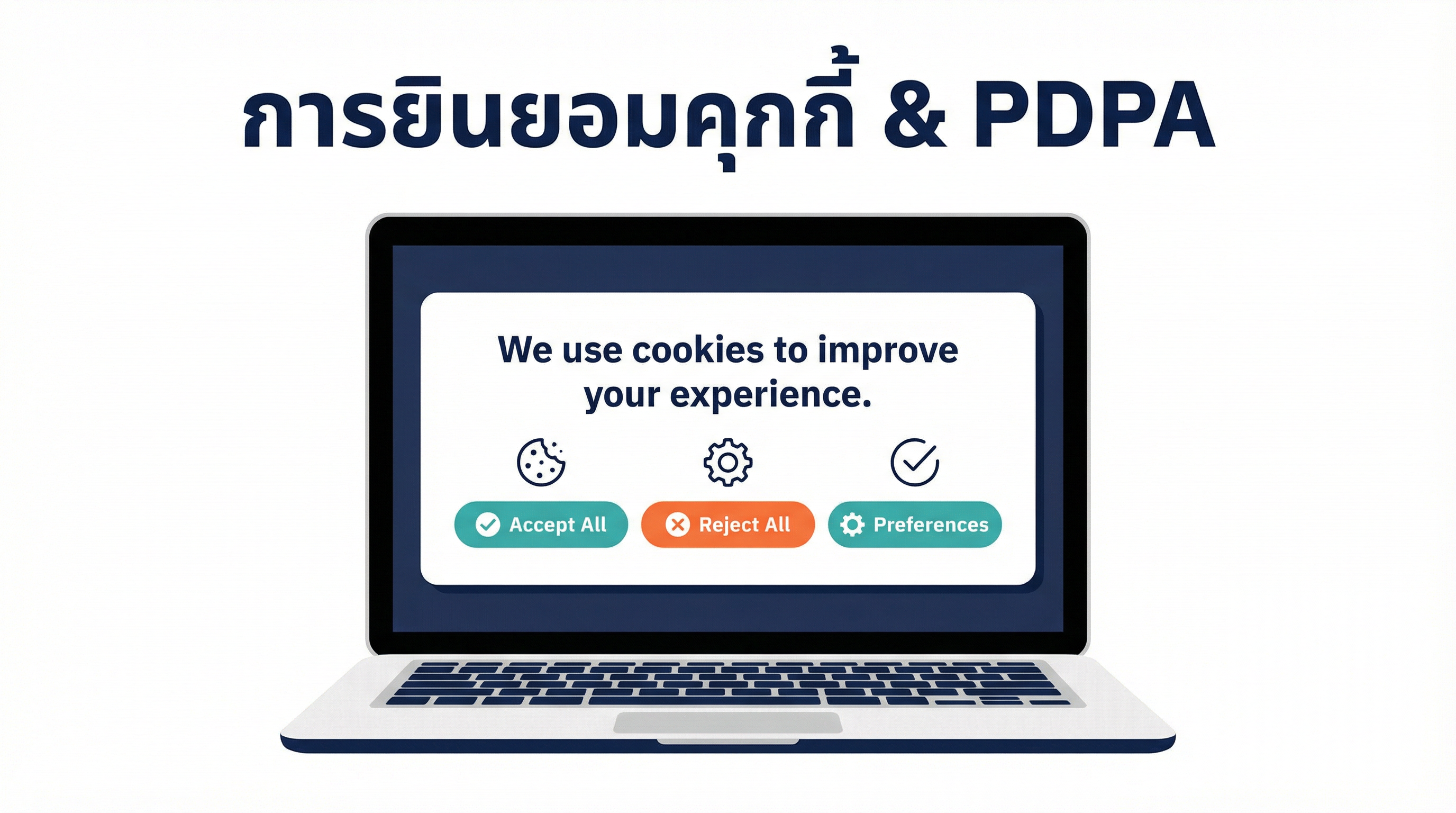
- There is a Cookie Banner: Display a cookie usage notification bar when a user visits the website for the first time.
- Requesting consent: Users must be able to choose whether or not to consent to the use of each type of cookie (except those necessary for the website to function).
- We have a cookie policy: Describe the types of cookies, their purpose, and the data retention period.
A correct privacy policy.
A privacy policy is an essential document that every website must have to inform users about its practices in handling personal data in accordance with the PDPA (Personal Data Protection Act). It should include the following information:
- Data controller: Contact information of the website owner.
- Data type: Personal information collected
- objective: Reasons for collecting, using, or disclosing information.
- period: Data retention period
- Disclosure of information: Individuals or organizations that may receive the information.
- Rights of the data subject: Explain the rights of data subjects under the PDPA.
- Security measures: How to protect data.
A privacy policy should be easily accessible from every page of the website, usually by placing a link at the bottom of the page (footer).
Obtaining consent from the user.
Obtaining consent is a key aspect of the PDPA, especially when websites need to collect sensitive personal data or use that data for purposes other than normal business operations.
- Clear and easy to understand: The consent form must be unambiguous, and users must easily understand its purpose.
- Separate parts: If there are multiple purposes, separate consent should be obtained.
- free: Consent must be voluntary; it is not compulsory.
- Consent can be withdrawn: Users must be able to easily withdraw their consent at any time.
For example, email newsletter subscriptions or the use of behavioral data to personalize advertisements require explicit consent.
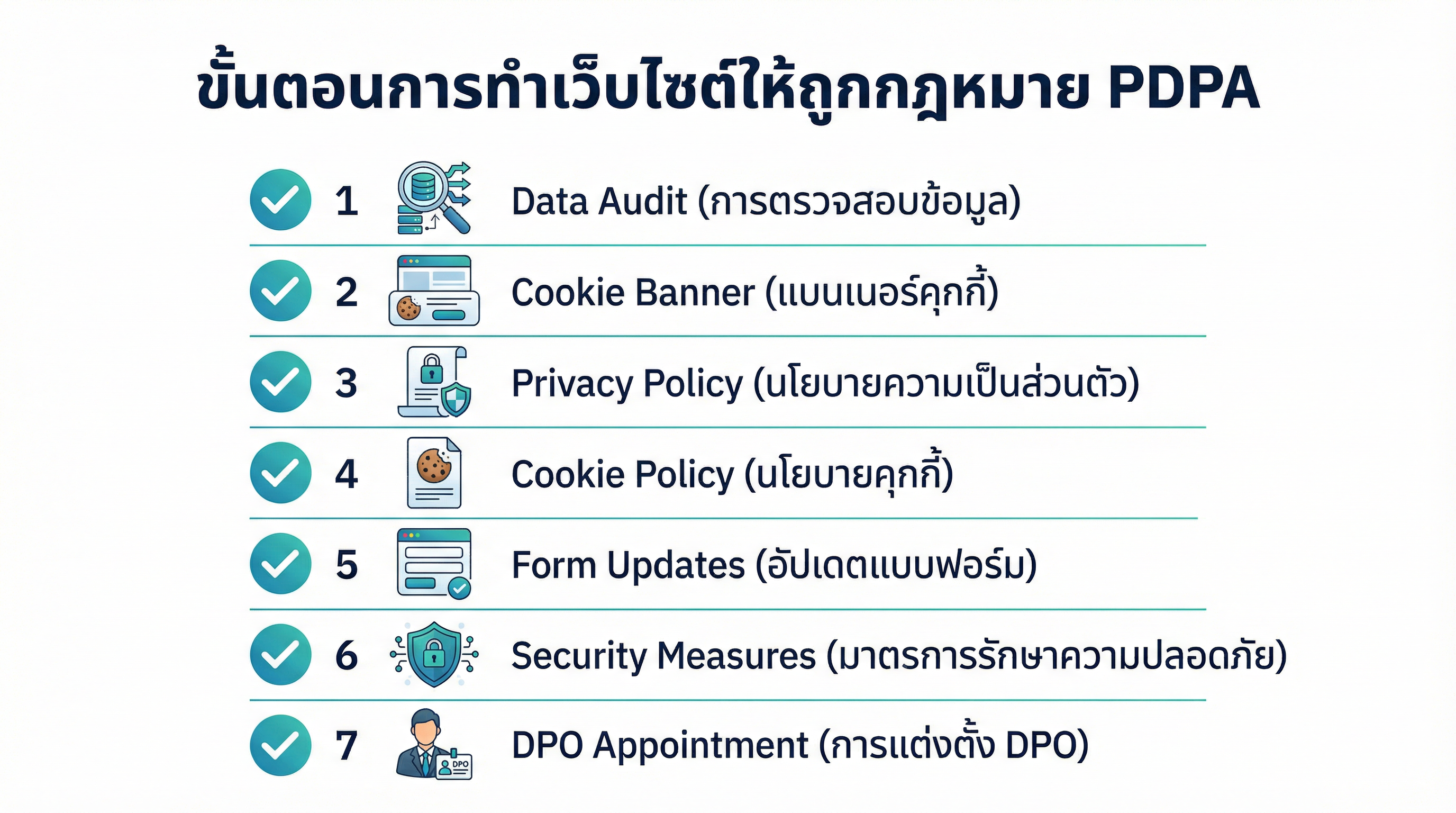
What businesses need to do on their website to comply with the PDPA.
To prepare for and fully comply with the PDPA, your website should do the following:
- Verify and compile a list of information: Explore what types of personal data your website collects, from what channels it collects it, and how it is used.
- Create a Cookie Consent Banner: Install a system for notifying and requesting consent for the use of customizable cookies.
- Create a privacy policy. Create a comprehensive policy that complies with the PDPA and clearly display a link to it on the website.
- Create a cookie policy: Explain in detail how each type of cookie is used.
- Update the form: Add a field for requesting consent to collect personal data in various forms, such as contact forms or membership forms.
- Security measures: Review and enhance the website's security systems to prevent unauthorized access to data.
- Appoint a DPO (if necessary): If your business falls under certain legal requirements, you may need to appoint a Data Protection Officer.
If you want Website development services Or, update the website to comply with the PDPA (Personal Data Protection Act) - Team. Creative.co.th We are happy to provide consultation and services.
Summary
The PDPA (Personal Data Protection Act) is not a distant concept for businesses with websites; it represents an opportunity to build trust with customers. Complying with the law not only keeps your business safe from legal repercussions but also demonstrates responsibility for users' personal data, leading to positive and lasting relationships with customers in the long run.
Is your website ready for PDPA?
Consult our experts to assess and improve your website to comply with privacy laws.