In the digital age, where websites serve as the main storefronts of businesses, simply having a beautifully designed website is no longer enough. What's more important is knowing how well the website effectively serves business goals. Using... KPI (Key Performance Indicator) Therefore, performance indicators (PEIs) are important tools that can help you accurately assess your website's performance.
This article will take you on a deep dive into 10 key KPIs that every business should track on their website. The data obtained can then be used to improve marketing strategies, enhance user experience, and most importantly, increase sales and profits for your business.
Table of Contents
What are KPIs for a website?
KPI (Key Performance Indicator) For websites, this is a numerical value used to measure whether your website is performing according to its set goals. These goals may vary depending on the type of business, such as a website. E-Commerce A corporate website might focus on sales, a lead generation website might focus on lead generation, and a news website might focus on time spent reading on the webpage.
Consistently tracking KPIs will help you shift from "guessing" to "data-driven decision making," which is a key to... Digital Marketing In the present era
Group 1: KPIs related to traffic volume (Traffic Metrics)
This group will tell you how many people visit your website and from what channels they are coming from.
1. Total number of users (Total Users / Visitors)
This refers to the total number of people who visited your website during a specific period (e.g., daily, weekly, monthly). This number provides an overview of your website's engagement and reach.
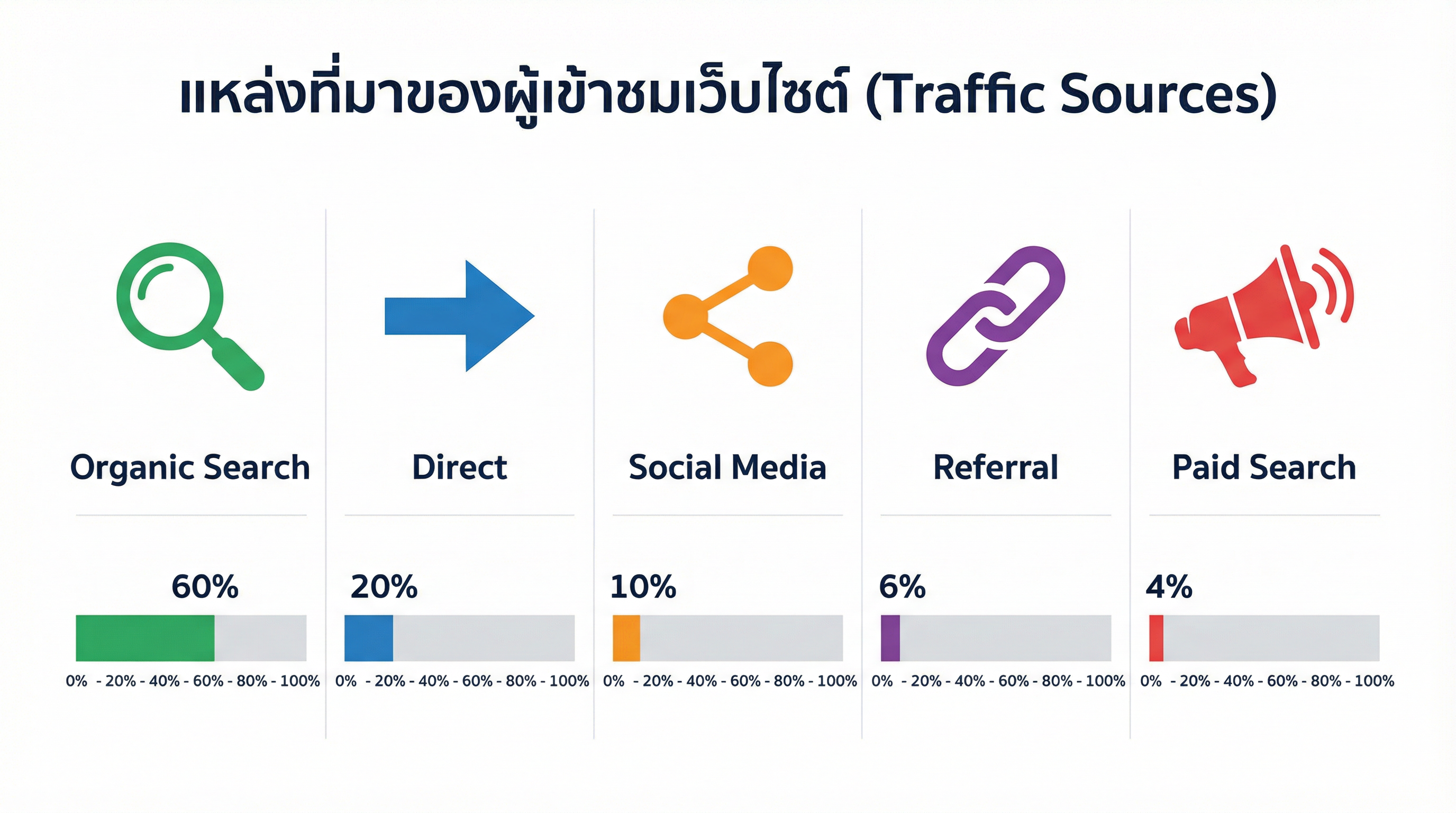
2. Sources of traffic.
Knowing where your audience is coming from helps you allocate your marketing budget correctly. It's typically divided into:
- Organic Search: It came from a Google search (SEO).
- Direct: Type the URL directly.
- Social: It came from various social media platforms.
- Referral: It came from a link on another website.
- Paid Search: It came from advertising.
3. Proportion of new and returning users (New vs Returning Visitors)
This number indicates your ability to attract new visitors and retain existing customers. A high number of returning visitors means your website offers valuable content or services that make people want to return.
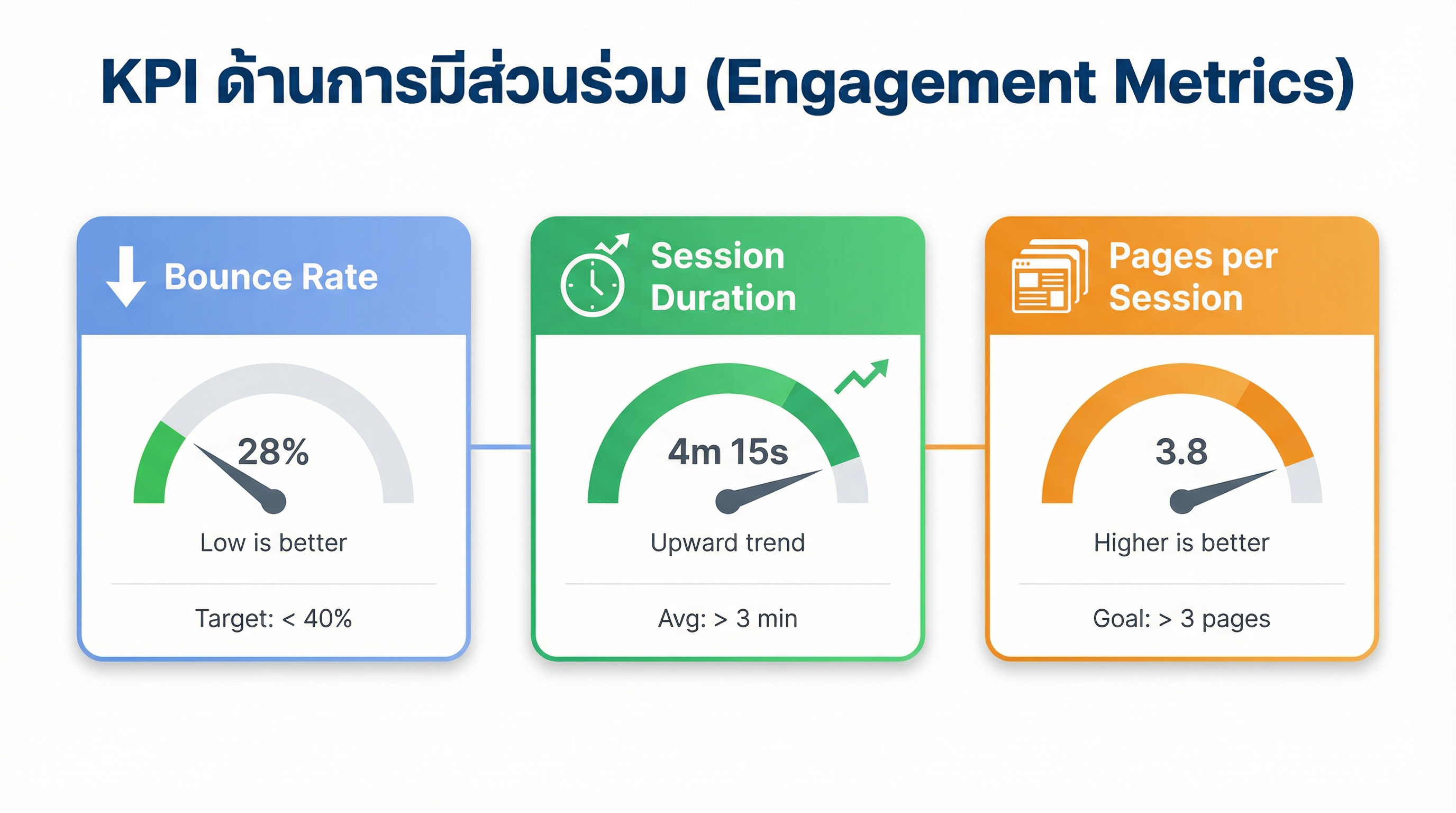
Group 2: Engagement Metrics KPIs
Once people arrive at your website, the next thing to measure is how much interest they show in your site.
4. Bounce Rate
This refers to the percentage of visitors to your website who immediately close the page without clicking on other pages. A high rate may mean that the content doesn't match what they were looking for, or the webpage loads too slowly.
5. Average Session Duration
The average time users spend on your website per visit indicates that your content is interesting and engaging, encouraging them to continue reading.
6. Number of pages viewed per session.
The average number of web pages a user clicks on during a single visit. A high number indicates that your website has good navigation and engaging, interconnected content.
Group 3: KPIs for achieving results (Conversion Metrics)
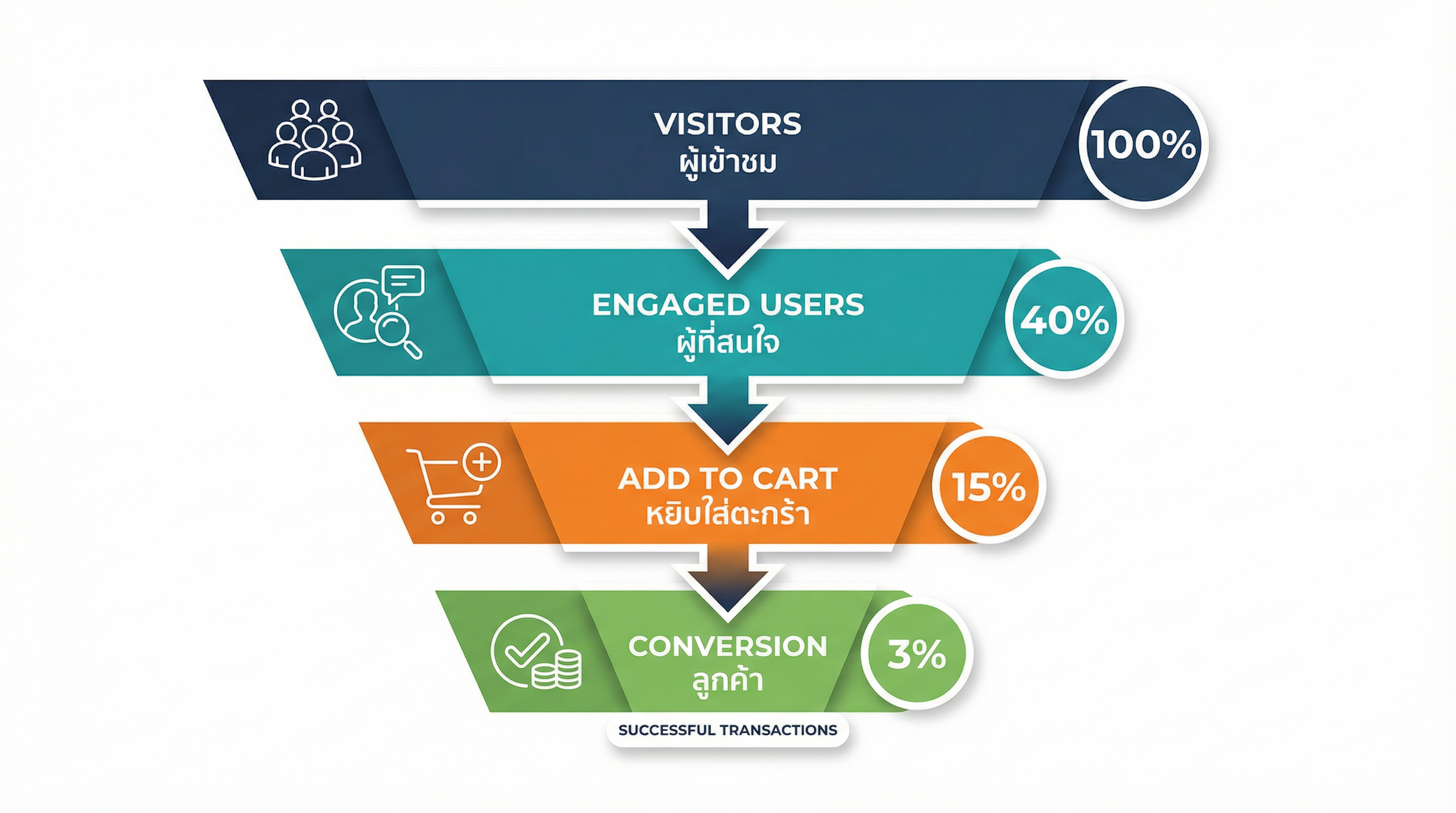
These are the most important KPIs for a business because they measure whether a website can generate tangible results.
7. Conversion Rate
This represents the percentage of website visitors who perform your desired "Action," such as making a purchase, filling out a contact form, or signing up for a membership. (Calculated as: Number of Conversions / Total Number of Visitors x 100)
8. Cost Per Acquisition (CPA)
If you're advertising to drive traffic to your website, you need to know how much it costs to acquire one customer (calculated as: total advertising cost / number of new customers).
9. Average Order Value (AOV)
For e-commerce websites, this figure represents the average amount a customer pays per order. Increasing AOV (e.g., cross-selling or up-selling) is a way to increase revenue without acquiring new customers.
10. Cart Abandonment Rate
A high percentage of customers add items to their cart but do not complete the payment process may indicate a problem. You might need to review your checkout process to see if it's too complicated or if the shipping fees are excessively high.
Tools for tracking website KPIs.
To effectively track these KPIs, you need to use the right data analysis tools:
- Google Analytics 4 (GA4): The most powerful free tool from Google for analyzing user behavior on websites.
- Google Search Console: Used to assess website performance in Google search results (SEO).
- Hotjar, or Crazy Egg: A heatmap tool to see which parts of a webpage people click on or scroll through the most.
Summary
Tracking website KPIs isn't just about looking at numbers; it's about analyzing that data to identify opportunities for improvement and development. If you're just starting out, it's recommended to begin by tracking only 3-5 KPIs that align with your business's core goals, and then gradually expand as you gain more experience.
Want to improve your website to increase conversions for your business?
Let our team of experts help analyze and develop your website to truly meet your business needs.