Many online business owners have likely encountered this problem: They spend tens or even hundreds of thousands of baht on advertising, their website traffic skyrockets, but when they check the number of orders or chat inquiries, it's eerily quiet... The question is... “"Where has everyone gone?"”
This is the point. CRO (Conversion Rate Optimization) We have to step in because getting people to your website is only half the battle in marketing. The other, more crucial half, is "how to get them to pay you." Today, we'll have an in-depth discussion, in business terms, about what CRO (Credit Relations Organization) is and how we can use it to revive sluggish sales.
Table of Contents
- 1. What is CRO? Explained simply in 1 minute.
- 2. Why is a CRO (Chief Executive Officer) essential for any business?
- 3. What is the difference between CRO and SEO?
- 4. How do I start a CRO (Computer-Related Reform) program to see real results?
- 5. Pitfalls that prevent your website from selling anything.“
1. What is CRO? Explained simply in 1 minute.
To explain it in simple terms... CRO (Conversion Rate Optimization) It's the process of optimizing your website or landing page to get as many visitors as possible to "what you want them to do" (conversion).
The phrase "what you want me to do" doesn't necessarily mean it has to be... “"Buying things"” Not always. It might be:
- Fill out the lead generation form.
- Press the button to send a message via LINE or Messenger.
- Subscribe to our newsletter.
- Download E-book
- Add the item to your cart.
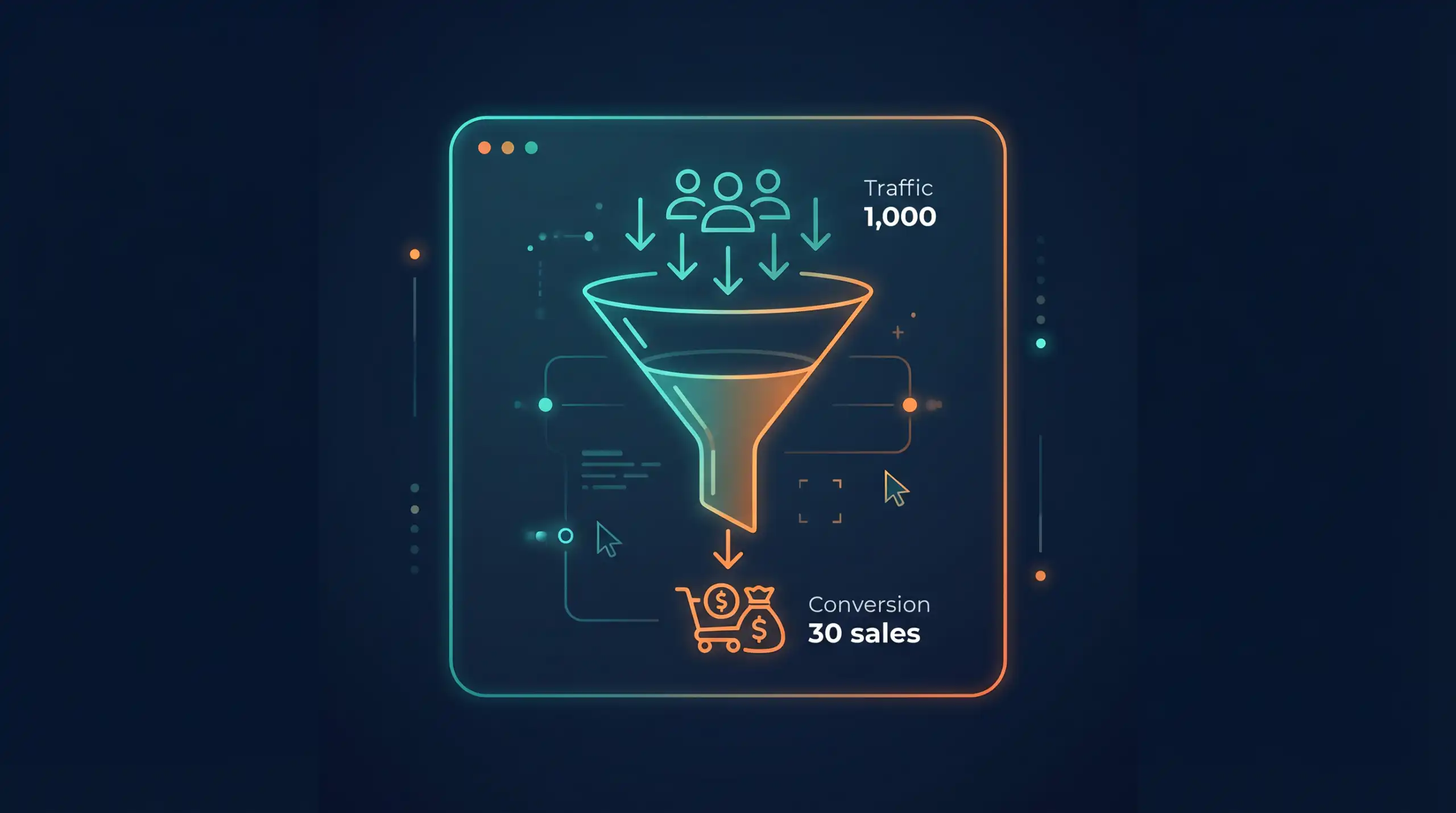
Let's say your website gets 1,000 visitors and 10 people make a purchase. That means your Conversion Rate is 1%… CRO (Conversion Rate) is about finding out how… “"How can we increase the number of buyers from the same 1,000 people to 20 or 30 people?"” That's right.
2. Why is a CRO (Chief Executive Officer) essential for any business?
Many people might argue, "If sales are down, just increase ad spending, get more visitors to your website, and eventually people will buy." ... This idea isn't wrong, but it... “"Wastes money"” Very much so, in an era where advertising costs are increasing every day.
Let's look at this example:
Situation A (No CRO):
You pay 10,000 baht for advertising and get 1,000 visitors to your website (cost per click: 10 baht).
Conversion Rate 1% = 10 customers acquired.
In summary: You acquired customers at a cost of 1,000 baht per person (Customer Acquisition Cost).
Situation B (Performing CRO):
You pay the same 10,000 baht for advertising, and you get the same 1,000 visitors to your website.
But you improved your website until your conversion rate increased to 3% = 30 customers.
In summary: You get customers for only 333 baht per person!
Do you get the picture? CRO (Cost Revolution) is like plugging the leaks in a water tank before you add more water. It helps you make the most of every dollar you spend on advertising, and allows you to comfortably compete in terms of profitability.
3. What is the difference between CRO and SEO?
People often confuse these two words. Let me summarize it clearly like this:
- SEO (Search Engine Optimization): Its function is to "bring people in," getting your website to rank on the first page of Google so that people find your website immediately when they search.
- CRO (Conversion Rate Optimization): Its function is to "welcome guests." Once people arrive, the goal is to impress them, build trust, and get them to pay.
These two things must work together. A website with good SEO but poor CRO is like a restaurant in a prime location with high foot traffic, but if the food is bad or the service is terrible, customers will eventually leave. Conversely, a website with excellent CRO but terrible SEO is like a Michelin-starred restaurant located in a secluded alley, unknown to anyone.
4. How do I start a CRO (Computer-Related Reform) program to see real results?
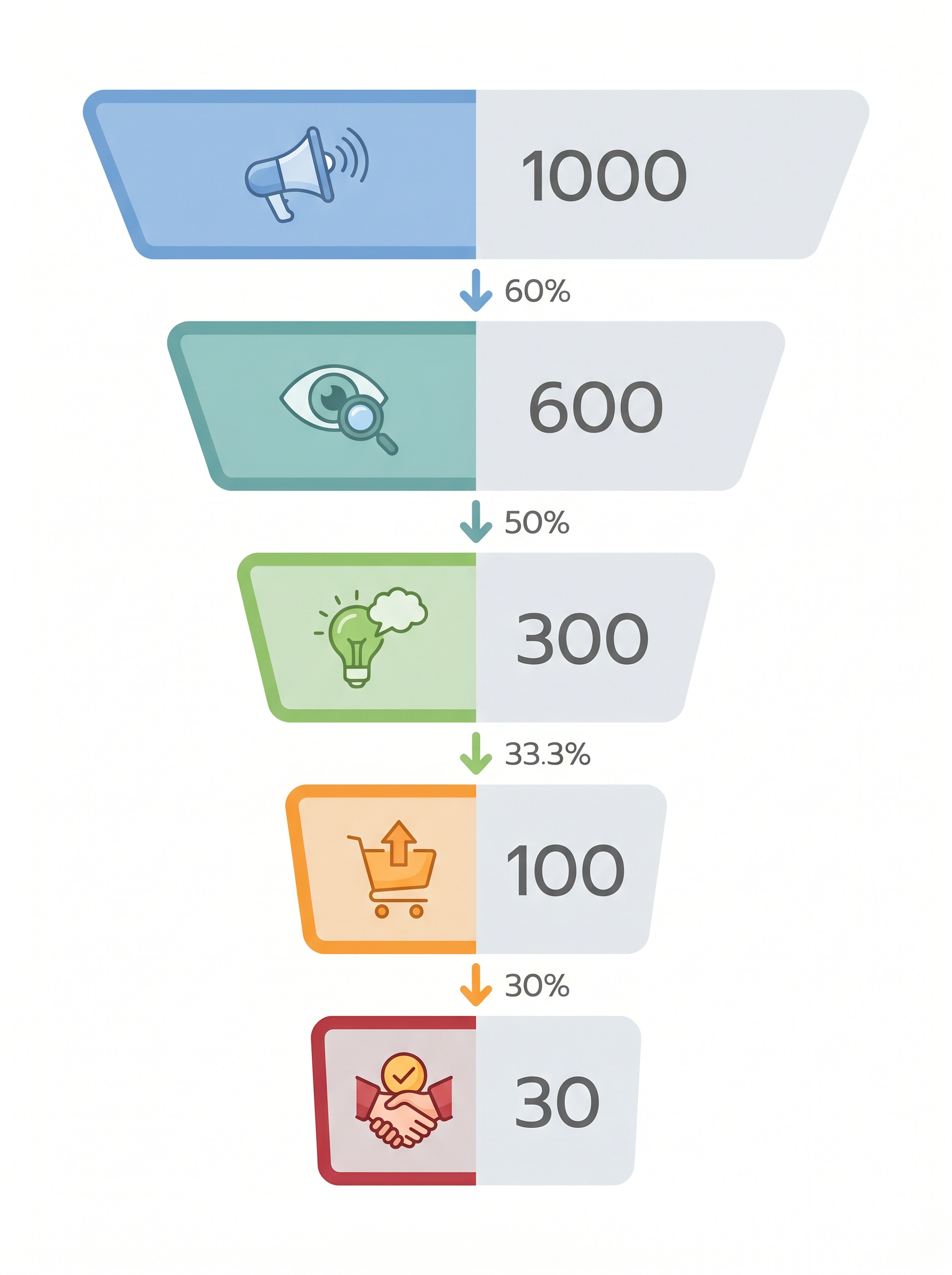
Doing CRO (Cost Reduction and Return) isn't about guessing, "Maybe changing the button to red will make more people click it." It requires data and testing. Here are some simple steps you can follow:
Step 1: Find the Leak
Before you can repair it, you need to know where the leak is. Go and check inside... Google Analytics Then find the answer to the question:
- Which page has the highest bounce rate?
- The person added items to their cart, but where did they discard the cart? (The address entry page? The payment page?)
- How do people who buy and those who don't buy differ in their web browsing behavior?
Step 2: Formulate a hypothesis.
Once you know the problem, try to hypothesize why it's happening that way, for example:
- “"The reason people might leave their baskets at checkout could be because we have limited payment options (only bank transfers are available, no credit card payments)."”
- “"People might visit a product page but not buy it because..." Product photos "It's unclear or incomplete."”
Step 3: Improve and Test (A/B Testing)
Once you have a hypothesis, start making changes! But don't change the entire website at once. Use A/B testing, which means creating two versions of the webpage (the original version A and the revised version B) and showing each version to different visitors to see which one generates better sales.
5. Pitfalls that prevent your website from selling anything.“
If you don't know where to start fixing the problem, try checking if your website is falling into these common pitfalls:
1. The website loads as slow as a snail.
People these days are impatient. If a website takes longer than 3 seconds to load, most people are ready to click the 'X' and close the page immediately. Website speed is fundamental to both SEO and CRO.
2. The webpage looks cluttered; I can't find the buttons.
Don't try to cram everything onto a single page, making it visually overwhelming. Customers should know where the "buy button" or "contact button" is within the first two seconds of seeing the website.
3. Mandatory membership is required before purchase.
This is a major conversion killer! Forcing customers to fill out lengthy forms, create passwords, and verify emails before allowing them to pay discourages many customers. There should always be a "Guest Checkout" option for customers to purchase directly.
4. No social proof.
People often buy things based on what others are doing. If your website only has self-written advertisements but no real customer reviews, no star ratings, and no photos of actual users, its credibility will plummet.
5. Poor mobile experience.
Currently, over 701,000 Thais shop online via mobile phones. If your website looks good on a computer but the text is tiny, the buttons are difficult to press, or the layout is broken on mobile, you could lose more than half of your conversions.
Is your website getting a lot of visitors, but sales aren't increasing?
Let our experts help you analyze and improve your website. Using measurable CRO techniques, we'll transform wasted traffic into sustainable sales growth.