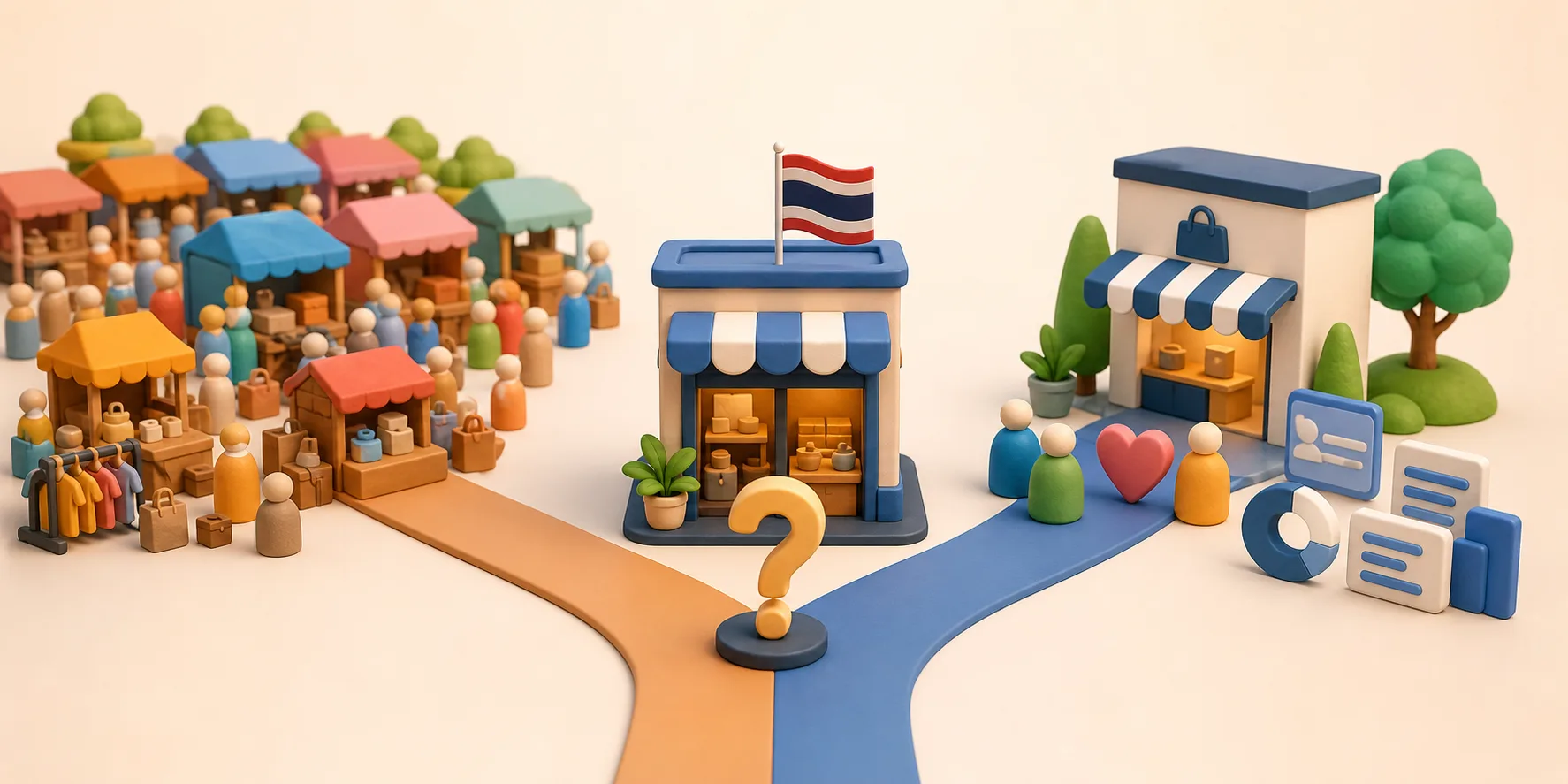
The question is: Is selling only on the Marketplace enough? This is a question online stores should ask themselves from the very beginning, not wait until sales stabilize before deciding. Marketplaces make it easy to start, with high foot traffic and readily available payment and shipping systems. However, the easiest channel to start with doesn't necessarily mean it's the one with the best control over the business.
The short answer is, "You can sell, but you shouldn't put all your hopes on it." Marketplaces are great for launching businesses, testing products, and collecting initial sales. But if your business wants to build a brand, collect customer data, reduce reliance on platform rules, and establish a long-term sales system, having... E-Commerce Website Running your own business alongside other ventures will make the shop stronger.
list of contents
- Is selling only on the Marketplace enough?
- What are the advantages of a marketplace? Why did the shop start from there?
- Limitations that shops often encounter when relying solely on marketplaces.
- What are the benefits of having your own website?
- Comparison table of Marketplace versus your own website.
- Recommended strategy: Don't abandon the Marketplace, but build a brand home.
- Questions that online stores often wonder about.
Is selling only on the Marketplace enough?
If the goal is to start selling quickly, a marketplace as a single channel might be sufficient in the beginning, as stores don't need to build the entire system from scratch. Customers are already searching for products, and many order management tasks are already in place. However, if the goal is to build a branded business with a customer base and not be solely constrained by price competition, a marketplace alone is often insufficient.
AEO type answer
Marketplaces are great for starting to sell and reach customers quickly, but they shouldn't be the sole channel for your business. You might lose control over customer data, costs, platform rules, and brand image. A better option is to sell on a marketplace alongside your own website.
A marketplace is a rented storefront, not the home of a brand.
Selling on a marketplace is similar to opening a store in a high-traffic shopping mall. The advantage is that people see your products quickly, but your store must adhere to the rules of that space, including fees, ranking, promotions, reviews, and competitors who have products listed nearby, allowing customers to compare prices instantly.
The points that need to be distinguished.
A marketplace helps you "sell," but your own website helps you "be remembered." This difference is crucial because today's sales figures and long-term customer relationships are not the same thing.
What are the advantages of a marketplace? Why did the shop start from there?
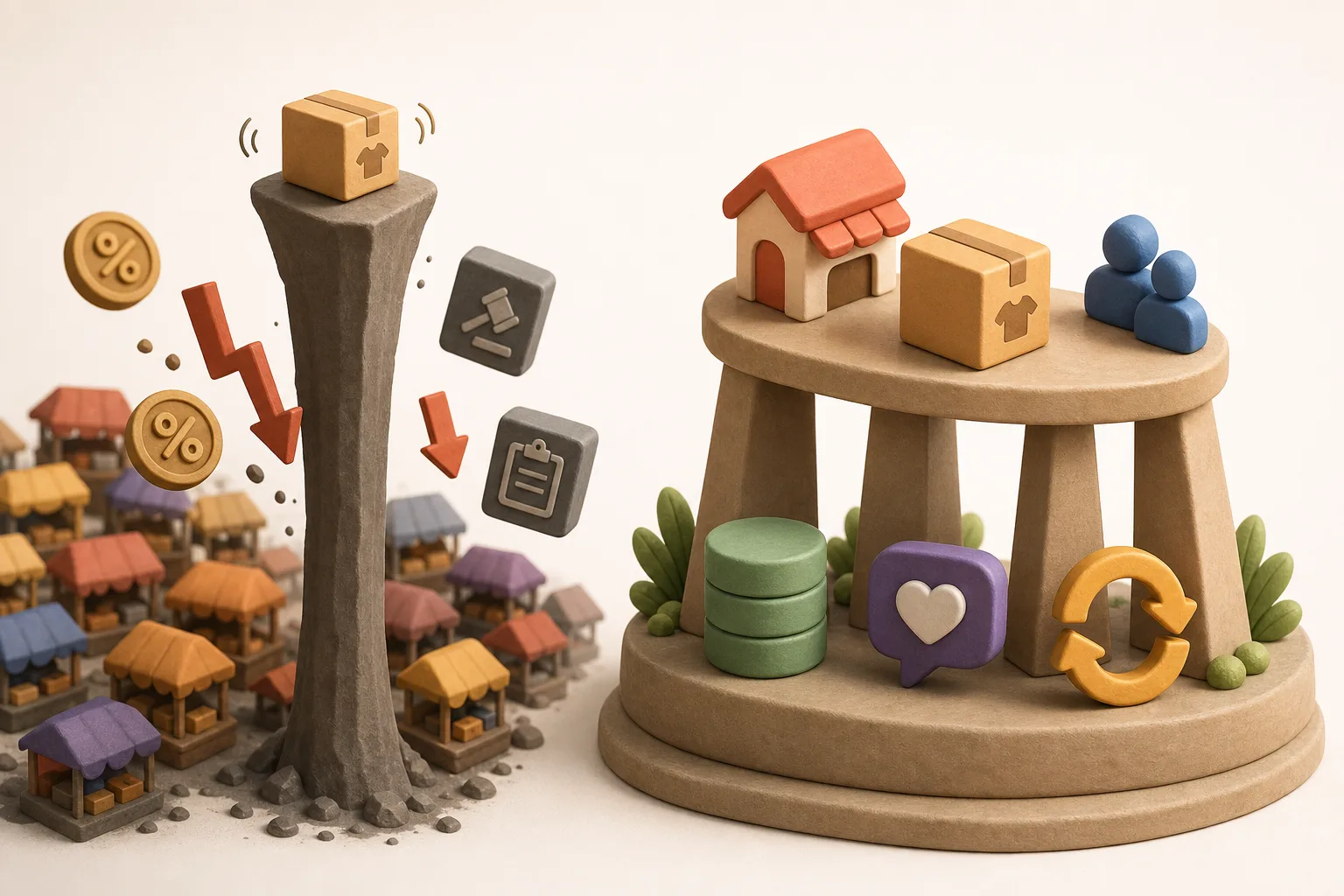
The advantages of a marketplace include an existing customer base, a search system, large campaigns, a review system, and it helps reduce the burden of basic system setup. It's suitable for stores that are testing new products, don't yet have a website management team, or want to gauge market response before investing more.
Tangible advantages
- Start selling quickly without having to build your own online store from day one.
- Customers are familiar with making payments and tracking orders.
- Suitable for products that want sales based on search results on the platform.
- It's great for testing prices, promotions, and market demand.
But this advantage comes with conditions.
As a store grows, costs and competition become more apparent, such as gross profit (GP), campaign participation fees, visibility enhancement costs, and competition with stores selling similar products. Without their own distribution channel, the store may have to constantly lower prices to maintain sales.
What type of shop is this suitable for?
A marketplace is suitable for businesses that want to quickly launch their business, easily compare prices, or those that still need to gather data on which products sell well before seriously developing their own website and branding system.
Limitations that shops often encounter when relying solely on marketplaces.
The problems don't appear immediately on day one, but become apparent as stores grow, acquire more products, and develop their own niche marketing strategies. A limitation of marketplaces is that stores don't own the entire space, many customers remember the platform better than the store name, and the scope of data available for marketing purposes is often limited.
1. Limited control over customer data.
Customer data is a vital asset for online businesses. Without its own database, businesses cannot fully implement CRM, send targeted promotions, track purchase history, and run campaigns for existing customers. This is in stark contrast to having a website with a membership system, lead collection, and the ability to leverage marketing efforts independently.
2. Competing on price is easy, but building a brand is difficult.
On marketplaces, customers are constantly being compared to other stores. Even if the product is good, the service is excellent, or the packaging is attractive, customers may still choose based on price or coupons first. If a business wants to sell based on storytelling, quality, and trustworthiness, its own website will allow it to tell its brand story in greater depth.
3. The rules change, and shops must adapt.
Platform policies, fees, product visibility, and campaign terms and conditions are subject to change. Stores without alternative channels will be hit harder because their sales are tied to a system they don't fully control.
The most obvious risk.
If one day your product ranking drops, advertising costs increase, or your store's account has problems, sales could drop instantly. Having alternative channels such as a website, customer base, email, LINE OA, or SEO content can help mitigate this risk.
What are the benefits of having your own website?
Online stores don't necessarily replace marketplaces, but rather function as a brand's home, a space where retailers can define the customer experience from the homepage and product pages to articles, reviews, membership systems, promotions, and back-end integrations.
The website helps stores build long-term assets.
Well-designed articles, product reviews, category pages, and product pages will gradually generate traffic from Google and help customers better understand the products. If your store wants to start with a system that truly suits your brand, you can review these guidelines. Online shopping websites vs. Marketplaces This allows you to compare the overall picture before making a decision.
What websites do better than marketplaces.
- Feel free to fully describe your brand and the unique selling points of your product.
- Collect leads and customer data to further develop marketing strategies.
- Use SEO to generate long-term traffic.
- Connect to back-end systems such as inventory, shipping, CRM, or accounting.
- Design promotions and purchasing experiences tailored to your business.
Common examples
A store might use a marketplace for fast-selling items and large campaigns, but a website for premium products, gift sets, items requiring extensive explanation, or customers who demand more after-sales service.
Comparison table of Marketplace versus your own website.
| section | Marketplace | My own website |
|---|---|---|
| Speed of initiating sales. | Very fast, ideal for market testing. | The system needs to be set up first, but it offers more control. |
| Branding | It's limited because customers remember the platform first. | Fully showcase your brand, experience, and trustworthiness. |
| Customer information | Partially accessible and subject to platform limitations. | Design your own data collection system and manage CRM. |
| expenses | There are GP (Gross Profit) costs, campaign costs, or advertising costs to maintain visibility. | There are costs for website development, system maintenance, and marketing, but it's an asset to the brand. |
| SEO | Less control over structure and content. | You can structure your own articles, categories, and product pages. |
| Risk | This depends on the platform's rules, rankings, and policies. | More control, but the system needs to be well-maintained. |
Recommended strategy: Don't abandon the Marketplace, but build a brand home.
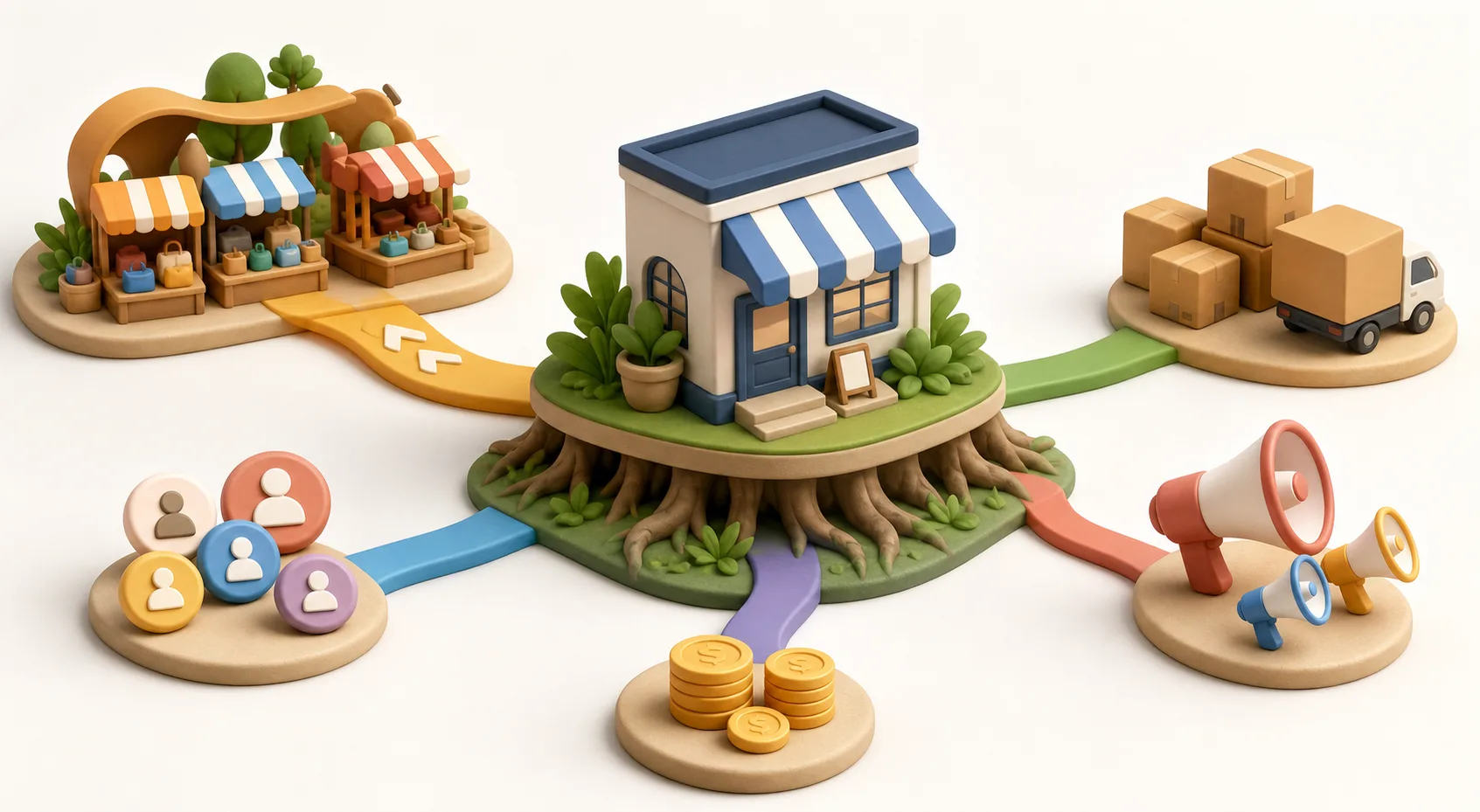
The most balanced approach for many businesses is to use marketplaces as a sales and customer acquisition channel, but gradually introduce customers to the brand through their own website. This could include attaching post-purchase experience testimonials, creating educational content, offering membership promotions, or creating landing pages for products that require more detailed explanations than typical sales posts.
What type of website is the best place to start?
If your store wants to get started quickly and is easy to manage, Shopify is an attractive option for stores that need a ready-to-use system. You can view their services. Shopify Design Yes, for businesses that are already using WordPress or want detailed content control, they could start with... WooCommerce Or, if the system is more complex, a custom e-commerce platform could be developed.
A system that should have been considered from the start.
An e-commerce website should have a product management system, payment methods, order notifications, shipping integration, customer data storage, and content pages that answer pre-purchase questions, especially regarding... Payment Gateway It is important to choose what suits customer behavior and business model.
Practical steps
- Use the Marketplace to collect data on which products are selling well and what customers frequently ask.
- Create a website for your flagship product and content that helps close sales.
- Connect marketing channels such as SEO, LINE OA, advertising, and email.
- Measure whether website orders, returning customers, and profit per order are improving.
Questions that online stores often wonder about.
Should small shops have a website?
If you're still testing products, a marketplace might be a good starting point. But if you have duplicate products, customers frequently ask the same questions, or your brand is starting to become well-known, having a website will help your store appear more credible and enable better long-term marketing.
If I already have a website, do I need to stop selling on the Marketplace?
Not necessarily. Many stores use both channels simultaneously. The marketplace is used to acquire new customers and collect revenue from campaigns, while the website is used for brand building, collecting customer data, and selling products that require more explanation or focus on customer experience.
Where should one start with an online store?
Start with your goals, such as direct sales, reducing long-term costs, lead generation, SEO, or integrating your backend systems. Then choose the right system, whether it's Shopify, WooCommerce, or a custom system for businesses with complex requirements.
In summary: The Marketplace is good, but it shouldn't be the sole pillar of support.
Marketplaces are a great channel for starting sales and reaching customers quickly, but if a store wants stable growth, having its own website allows for better control over the brand, customer data, buying experience, and long-term marketing. The answer, therefore, isn't to choose one or the other, but to clearly define the role of each channel.
Let Creative help set up your brand's online sales system.
If your store is already selling on a marketplace and you want your own website, our Creative team will analyze your products, sales channels, payment systems, and e-commerce structure to help you find the perfect fit for your business. This ensures you don't just have a website, but a truly viable sales channel for growth.