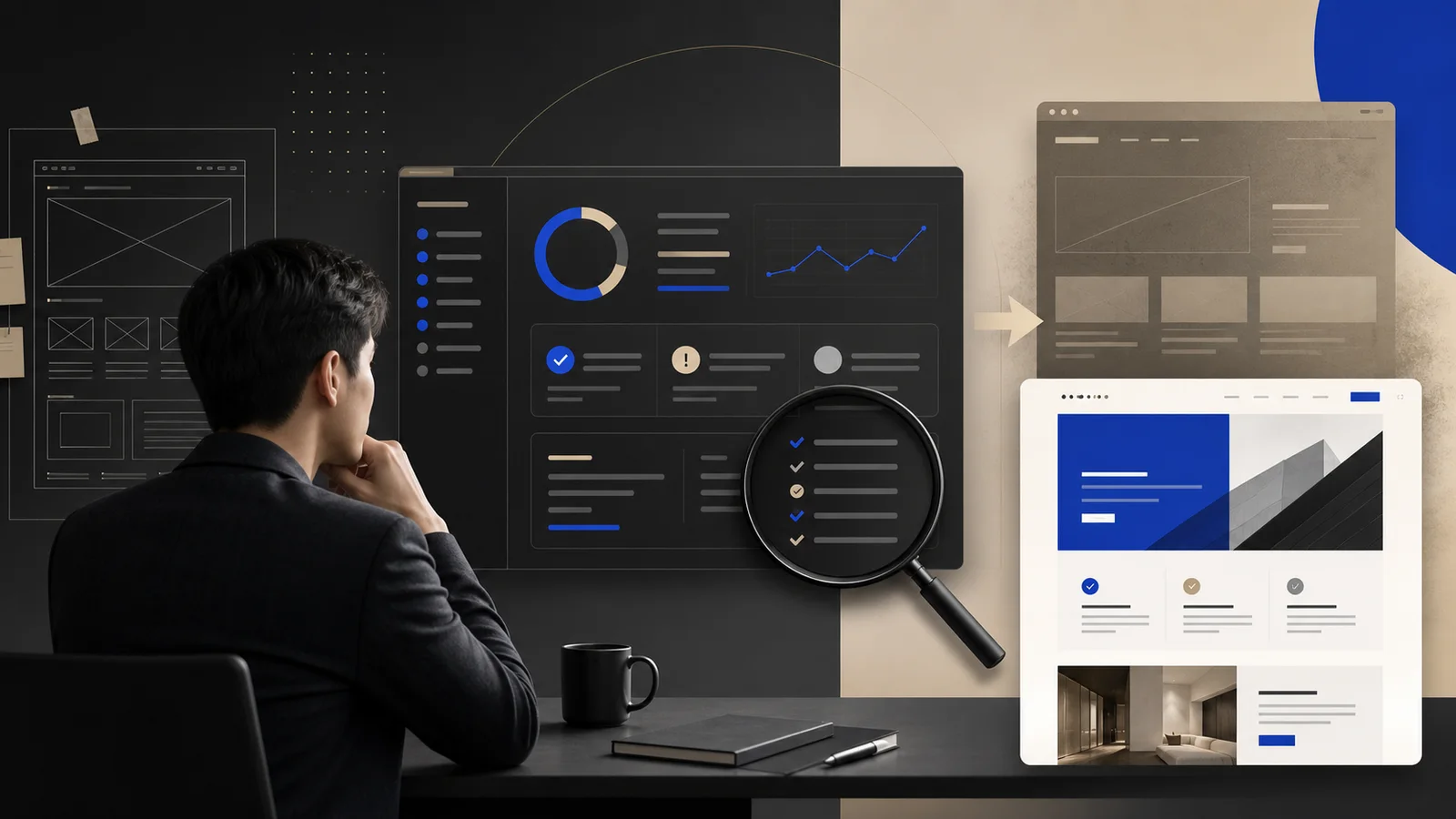
An old website may look outdated, but completely overhauling it without reviewing existing data could cause previously ranked SEO pages or effective contact information to disappear along with the old design.
A website audit before redesigning involves identifying what should be kept, what needs to be fixed, and what should be removed. This allows the next round of investment to solve business problems rather than just changing the website's appearance.
What to look for in a website audit before redesigning?
Start with visitor data: high-traffic pages, search terms, conversion rates, speed, and the content the team actually uses. Then, look at brand image and backend systems.
Start with measurable goals.
Clearly define the rationale for the redesign, such as streamlining the quotation process, increasing speed, supporting mobile devices, or offering new services. Having clear goals will make decisions about design and features easier.
Items to prepare before starting the project.
- Your role is already focused on generating leads or sales.
- URLs that contain traffic from search engines.
- Forms and connections used by the team.
- Problems that customers or the sales team report repeatedly.
Find the problems users encounter before the team does.
Complex menus, lengthy forms, missing contact buttons, or difficult-to-read mobile websites can have a bigger impact than outdated colors or fonts.
Design pathways to make decision-making easier for people.
The customer journey should be tested from the homepage to the mobile contacts, using users unfamiliar with the website. This will reveal bottlenecks that internal teams often overlook. A website redesign perspective that helps control budget.
Plan your website migration without compromising SEO.
When changing URLs, content structures, or the existing system, redirects should be implemented, titles should be checked, and key pages should be monitored after activation to prevent traffic loss without notice.
Connect related tasks to create a systematic approach.
Audit reports should be prioritized based on their impact on the business and the difficulty of resolution, in order to break down tasks into phases and avoid unnecessarily prolonging the project. Website maintenance to prevent long-term problems.
Small details that are often overlooked.
A new website doesn't need to change the URLs of every page. Maintaining pages and content that are already working may be more worthwhile than starting from scratch.
Frequently Asked Questions
Does redesigning a website take longer than building a new one?
Not always, but it takes time to review the existing data and carefully plan the page migration. If the old website has accumulated content and SEO, this part of the work is very important.
Can I just change the design?
It's possible, but you should check speed, mobile usability, and conversion rates simultaneously, as this presents a good opportunity to address issues embedded in the existing website.
Set up a website to work with your real business.
If your existing website is no longer meeting your needs, the Creative Plus One team will help audit it before deciding whether to make localized adjustments or redesign the entire system.