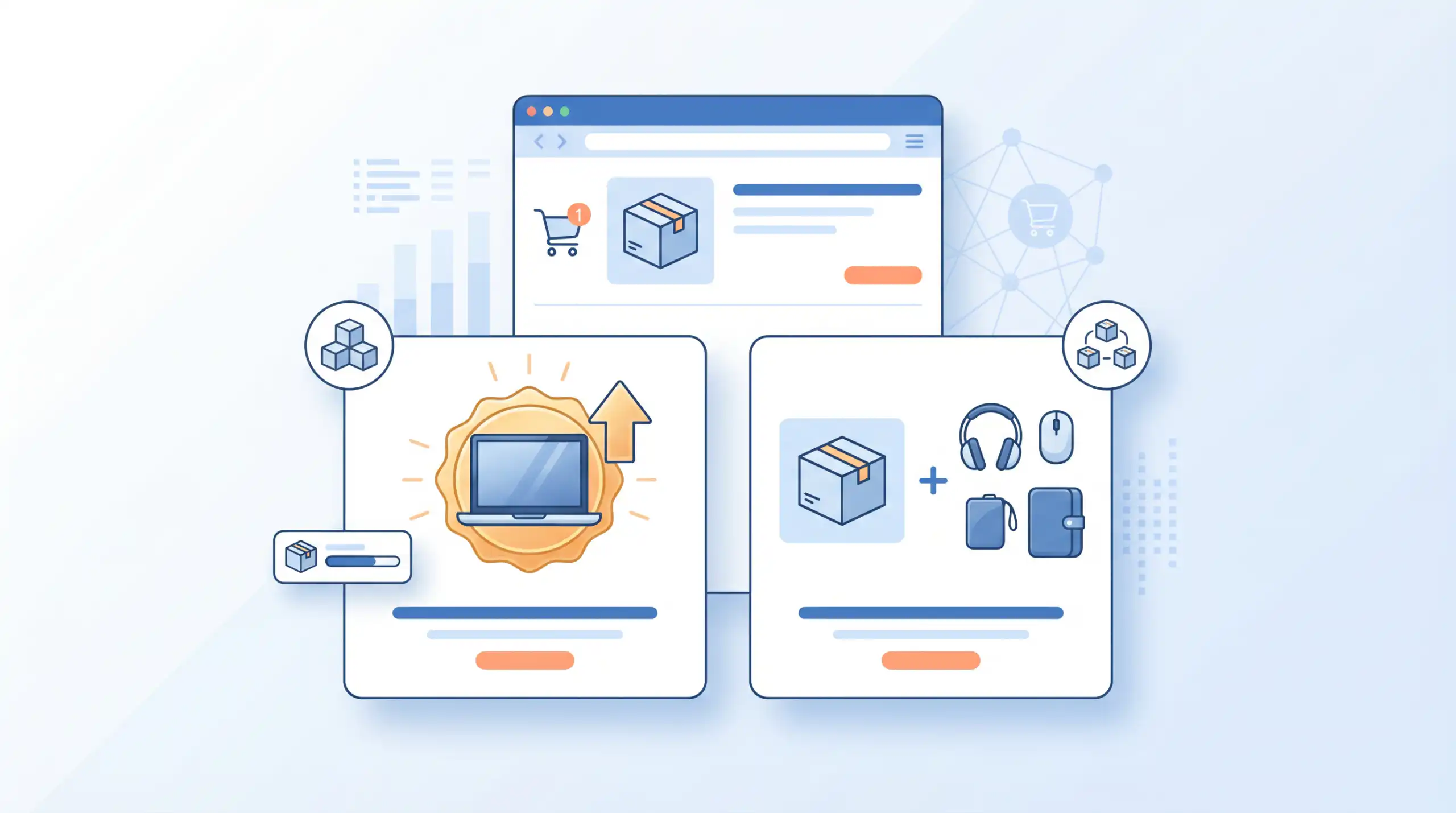
Many businesses often invest huge budgets in advertising to attract "new customers" to their websites, but overlook the treasure right in front of them: "existing customers" who are already considering making a purchase.
Increasing the average order value (AOV) per customer is the most cost-effective strategy for maximizing profits, and the best tool for this is [technique name]. Cross-selling and Upselling That's right. Today we'll delve deeper into what these two terms mean and how to apply them to your website.
Table of Contents
1. What is upselling? (Selling something more expensive)
Upselling It's about offering a product or service that is "higher value" or "more premium" than what the customer is considering, in order to encourage them to upgrade their purchase.
A clear example is when you go to buy a smartphone and the salesperson recommends, "For just 2,000 baht more, you can get double the storage capacity. It's a much better deal!" Or in the context of... E-commerce design It means displaying the same product line but the Pro version, or the model with more features, on the Product Page.
2. What is cross-selling? (Selling related products)
While upselling is upgrading. Cross-selling It refers to offering "related products" or "products that complement each other" to enhance the user experience.
A classic cross-selling phrase is, "Would you like to add French fries and a soft drink?" For online stores, this technique often comes in the form of a "Frequently Bought Together" section. For example, when a customer adds a camera to their cart, the system might suggest adding a memory card, camera bag, or tripod.
3. Why are these two techniques essential for any e-commerce website?
Implementing both of these techniques on a website isn't just about generating revenue; it also has positive effects in several other areas:
Increase sales per transaction (AOV) without paying extra for advertising.
When customers are in their purchasing mode, offering products that meet their needs makes it much easier for them to decide to buy, which helps increase... Conversion Rate (CRO) And you'll earn income without spending a single penny on advertising to attract new visitors to your website.
Creating a positive customer experience (UX)
Recommending products that are relevant to the customer saves them the time of searching for them themselves. UX/UI design This demonstrates that the brand truly understands their needs, leading to positive customer feedback and future repeat purchases.
4. Techniques for seamless and effective implementation on websites.
To successfully cross-sell or upsell, it requires skill, not a pushy approach that annoys customers.
Right place, right time
Product presentations should be done at the right time, such as: Product Page Ideal for upselling (comparing models) while... Cart or Checkout page Ideal for cross-selling (small items that are easy to purchase in bulk).
The 25% Rule
Always remember that the products you offer for upselling or cross-selling should not be priced higher than 25% of the original purchase price of the main product the customer intended to buy. If it's too expensive, customers will usually reject it immediately.
Use data to help.
Don't just randomly select products to display, but use tools such as... Google Analytics 4 (GA4) Or, an e-commerce platform's system can analyze customer behavior to determine if those who buy product A are likely to also buy product B, and then use that data to set up an automated product recommendation system.
The perfect combination of cross-selling and upselling will transform your website from just an "online catalog" into a 24/7 "salesperson."
Want your website to help generate more sales?
Let our team of professionals help you analyze and optimize your website. We'll implement a smart e-commerce system with cross-selling and upselling features designed specifically to boost your business's sales.