In an era where technology plays a role in every aspect of life and business, the word... Digital Transformation Digital business transformation is no longer just an "option" or a matter for large organizations, but has become a crucial "lifesaver" for small and medium-sized enterprises (SMEs) that want to maintain their competitiveness and achieve sustainable long-term growth.
This article will take you on a deep dive into what Digital Transformation is, why SMEs need to prioritize it, and provide a practical roadmap for adaptation. It will also cover the tools that can help your business overcome its limitations and achieve success in the digital age.
Table of Contents
- 1. What is Digital Transformation? It's not just about having a website.
- 2. Why do SMEs need to undergo Digital Transformation?
- 3. The Four Pillars of Digital Transformation
- 4. Roadmap to the transformation of SMEs.
- 5. Tools and technologies that SMEs should start using.
- 6. Summary and next steps for your business.
1. What is Digital Transformation? It's not just about having a website.
Many people mistakenly believe that digital transformation is simply about creating a website, opening a Facebook page, or converting paper documents into PDF files. In reality, those are only minor aspects. “Digitization” (Digital conversion of data) and “"Digitalization"” (Only by adopting digital solutions to improve work processes.)
Digital Transformation (DX) It is the integration of digital technology into all sectors of the business, resulting in radical transformation. “"Procedure"” and “"How to deliver value"” For customers, this includes changing the organizational culture to be ready to embrace innovation, dare to experiment, and learn from failure.
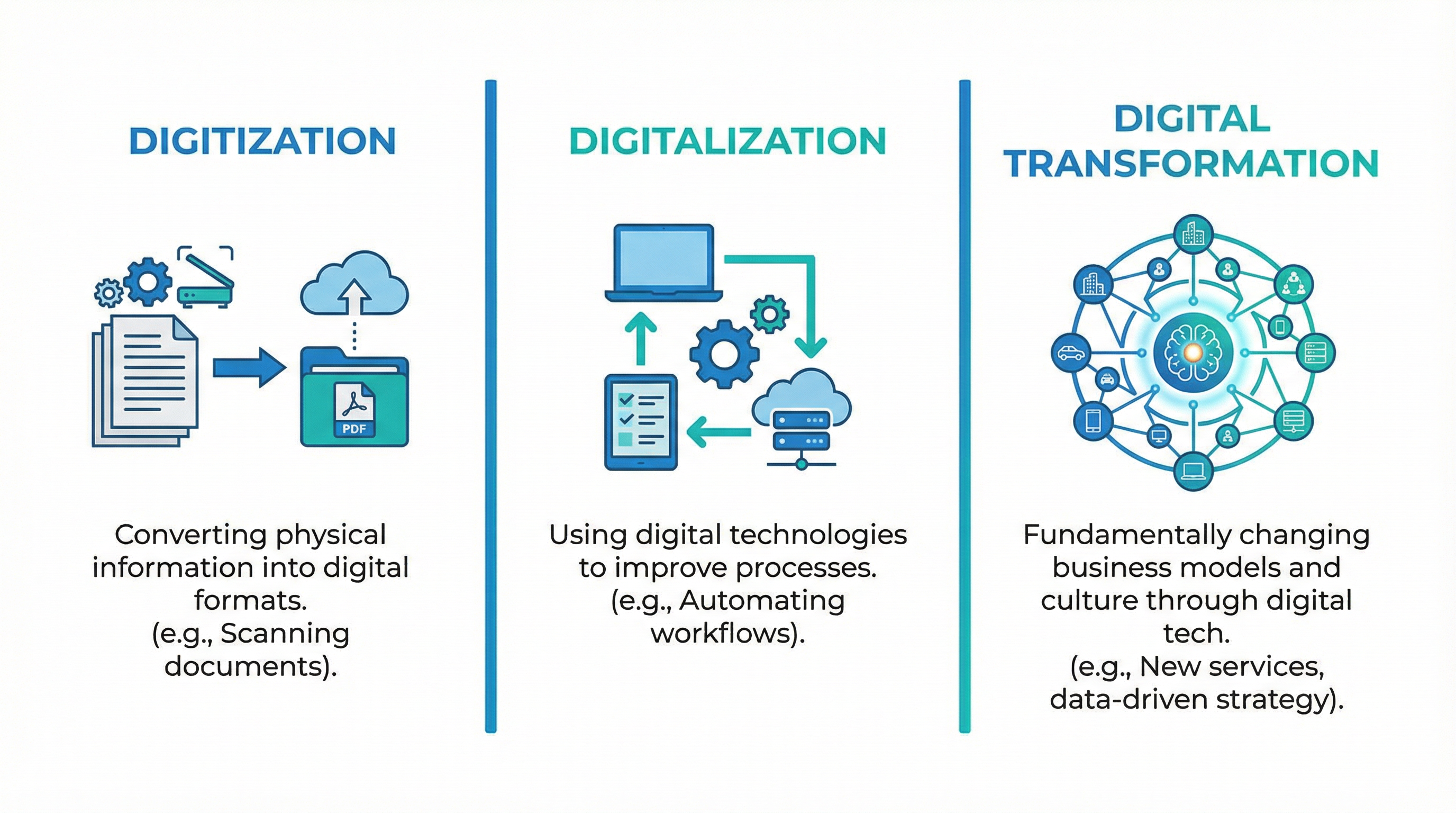
For SMEs, digital transformation might mean implementing automation in warehouse management, using data to analyze customer behavior to offer more relevant products, or transforming the business model from a point-of-sale approach to... E-commerce system A fully integrated system that connects data from all channels.
2. Why do SMEs need to undergo Digital Transformation?
Small and medium-sized enterprises (SMEs) often face limitations in terms of capital and human resources, causing many to hesitate to invest in new technologies. However, ignoring this shift can lead to significant risks. This is a key reason why SMEs need to adapt quickly:
2.1 A complete shift in consumer behavior.
Today's consumers expect fast, seamless, and personalized experiences. They search for information, compare prices, and make purchasing decisions online. If your business lacks a digital presence or provides a poor user experience, customers are ready to switch to a competitor immediately.
2.2 Increase efficiency and reduce costs in the long term.
Adopting technology helps reduce redundant work processes, minimizes human error, and allows employees to focus on value-added tasks. While there is an initial investment, it can significantly reduce operating costs in the long run.
2.3 Data-Driven Decision Making
The era of relying on "instinct" in business management is over. Digital transformation enables SMEs to collect and analyze customer data, sales, and operational performance in real-time, allowing for more effective strategic planning. Digital Marketing And improve products and services with greater precision.
3. The Four Pillars of Digital Transformation
Achieving success in digital transformation isn't just about buying and installing expensive software. It requires focusing on four key pillars:
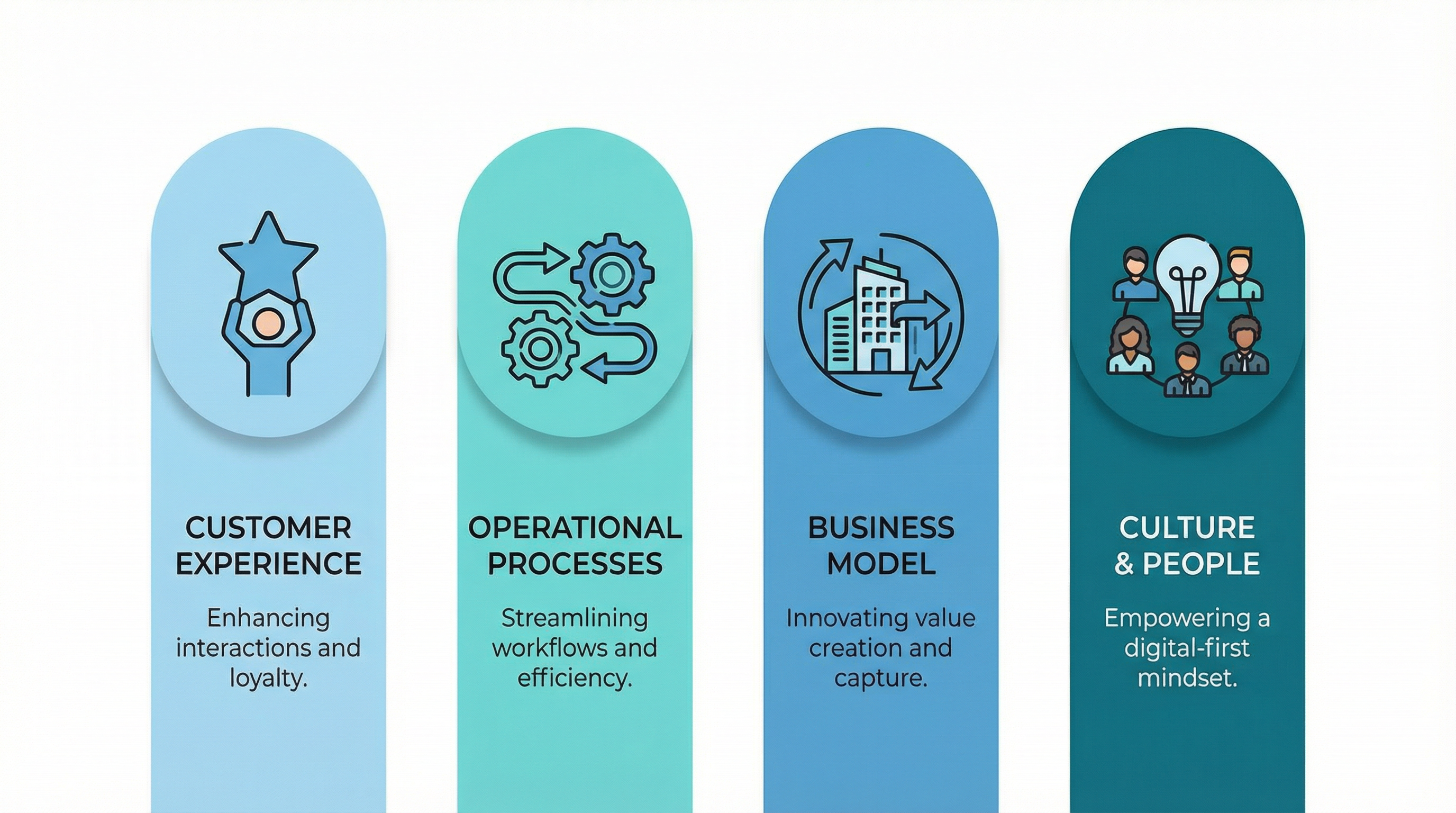
3.1 Customer Experience
The most crucial aspect of adaptation is for businesses to understand the customer journey at every touchpoint and leverage technology to enhance the experience. This includes having a user-friendly, fast-loading, and mobile-friendly website, or using chatbots to answer basic customer questions 24/7.
3.2 Operational Processes
Improving internal processes through digitalization includes using an ERP system for SMEs to link accounting, inventory, and sales data, transitioning from paper-based systems to Document Management Systems (DMS), or utilizing collaboration tools to enable teams to work together more efficiently.
3.3 Business Model
Technology may open up opportunities for SMEs to create new business models that they were never able to do before, such as shifting from brick-and-mortar stores to subscription models, or expanding into new customer segments online without opening additional branches.
3.4 Organizational Culture and People
This is the biggest challenge. Organizations must create a culture that embraces change, encourages employees to learn new digital skills (upskilling/reskilling), and executives must lead the transformation in a proactive manner.
4. Roadmap to the transformation of SMEs.
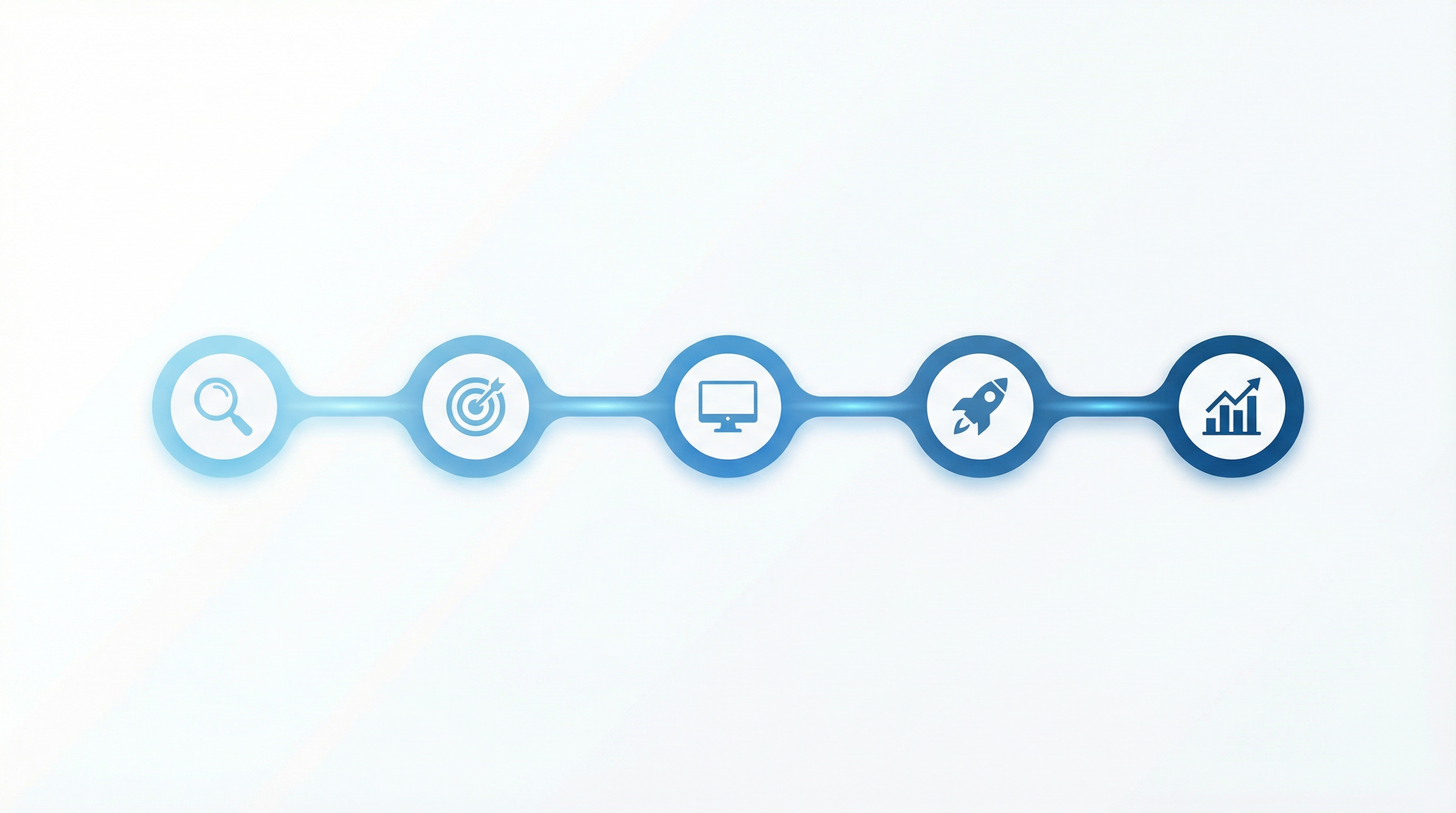
For SMEs with limited resources, digital transformation doesn't need to be done all at once. It should begin in stages, as follows:
Step 1: Assess the current status.
Explore where your business stands, identify problematic processes, locate bottlenecks, and determine your key business goals.
Step 2: Define Goals and Strategies (Strategy & Goals)
Set clear, measurable goals (SMART Goals), such as increasing online sales by 30% within 6 months or reducing document management time by 50%, along with a budget and timeframe.
Step 3: Selecting the Appropriate Technology (Technology Selection)
It's not necessary to use the most expensive or complex system. Instead, choose a system that addresses your business problems, is easy to use, and can scale in the future.
Step 4: Pilot Project
Start with small projects to test the system and gather feedback from the team and clients. If problems arise, they can be resolved quickly without impacting the overall project.
Step 5: Scale and Optimize.
Once the pilot project is successful, it is gradually scaled up to other parts of the organization, while data is collected and continuously improved.
5. Tools and technologies that SMEs should start using.
To give SMEs looking to start their business some ideas, here are some basic tools to consider:
- Customer Relationship Management (CRM) system: Help us store customer data and purchase history to create targeted marketing campaigns.
- A standardized e-commerce platform: such as WordPress WooCommerce Or Shopify, which helps systematize online sales and makes managing stock and orders easier.
- Data analytics tools: For example, Google Analytics 4 (GA4) can be used to analyze website visitor behavior and the performance of marketing campaigns.
- Cloud Computing System: It helps reduce the cost of setting up your own server and increases the flexibility to access data from anywhere at any time.
- Collaboration Tools: For example, Google Workspace, Microsoft 365, or Slack can be used to enable teams to communicate and collaborate smoothly.
6. Summary and next steps for your business.
Digital transformation is not a destination, but an ongoing journey. For SMEs, starting late is better than not starting at all. The key is to have a clear vision, be open to new things, and act gradually.
Having a partner with digital expertise will help make this transformation journey smoother and more efficient, reduce the risk of trial and error, and help your business achieve success in the digital age.
Are you ready to upgrade your SME business to the digital age?
Let Creative.co.th be your partner in your Digital Transformation journey with our services.We develop WordPress websites., We provide e-commerce system implementation and comprehensive digital solution consulting.