For travel companies, a website shouldn't just be a pretty photo gallery or a page for customers to chat with. It should be a place where customers can confidently search for packages, compare travel dates, view details, and submit booking requests. At the same time, the team should be able to update prices, seat availability, and booking status from a single backend, without having to edit information multiple times.
work We create websites for tour companies. Thinking from a practical perspective requires considering both the front-end and back-end. This article summarizes what a tour website with a booking system should include, what types of businesses it's suitable for, and what questions should be clarified before starting the project to ensure the website actually generates sales every day, not just a great first launch.
Comprehensive website development services for tour companies.
The word We create tour websites. A comprehensive approach doesn't mean integrating every feature on day one, but rather structuring the front-end, data management, and marketing systems to work seamlessly together. It starts with understanding what type of tour company it is, how many packages they offer, who updates the information, how customers book and pay, and the existing systems that need to be integrated.
The landing page for a tour company's website should answer questions quickly.
The homepage should let visitors know within seconds what type of tours the company specializes in, what are its featured packages, the nearest departure dates, and how to contact or book. It doesn't need to include every program on one page, but rather direct them to detailed pages that match their interests.
The company's selling points include package deals, prominent tour viewing buttons, and contact buttons visible on mobile devices.
Search or filter by country, time period, budget, number of days, and travel type.
Company information, team details, reviews, booking terms and conditions, and reliable support contact information.
A website is a central hub for information that social media cannot fully replicate.
Social media posts are great for attracting attention, but tour details change frequently and customers need to compare multiple options. Having... Travel company website The system, which includes pricing, schedules, and what's included and excluded, helps reduce repetitive questions from the team and allows customers to make decisions based on the same set of data.
How do tour websites help increase sales for travel companies?
Tour customers don't make their decision based solely on a picture of the destination. They also need to consider the travel dates, daily details, hotels, flights, payment terms, and the reliability of the tour operator. When information is scattered throughout images or chats, the chances of a customer changing their mind mid-trip increase.
Turn your audience into actionable leads.
A good tour website starts by showing people suitable packages and then giving them clear options for further action, such as requesting details, booking seats, paying a deposit, or speaking with a representative. The forms should only ask for essential information, such as the number of travelers, desired dates, and contact details, rather than requiring lengthy forms that discourage customers.
SEO helps useful packages stay found for longer.
Separating package pages by destination or interest helps search engines better understand the content. Each page should include the tour name, travel dates, highlights, itinerary, price, terms and conditions, and meaningful images. Avoid copying and pasting the same description across all packages, as this makes it difficult for both users and search engines to differentiate.
Indicators to look for after launching the website.
In addition to website visits, you should also track the number of people continuously viewing packages, the number of form submissions, the booking rate from each channel, the time the team spends responding to inquiries, and search results that haven't yet been found. This data can help you determine whether to add new packages, improve the page design, or adjust the presentation method.
Key features of a tour company website.
Features of Tour package website You should choose based on your business's actual sales methods, not just because you see something similar on other websites. Starting with the core elements you use daily and gradually increasing the complexity as your team is ready usually leads to faster deployment and easier maintenance. We create tour websites. A good approach starts with the question of how packages and itineraries are managed, not just with the appearance of the homepage.
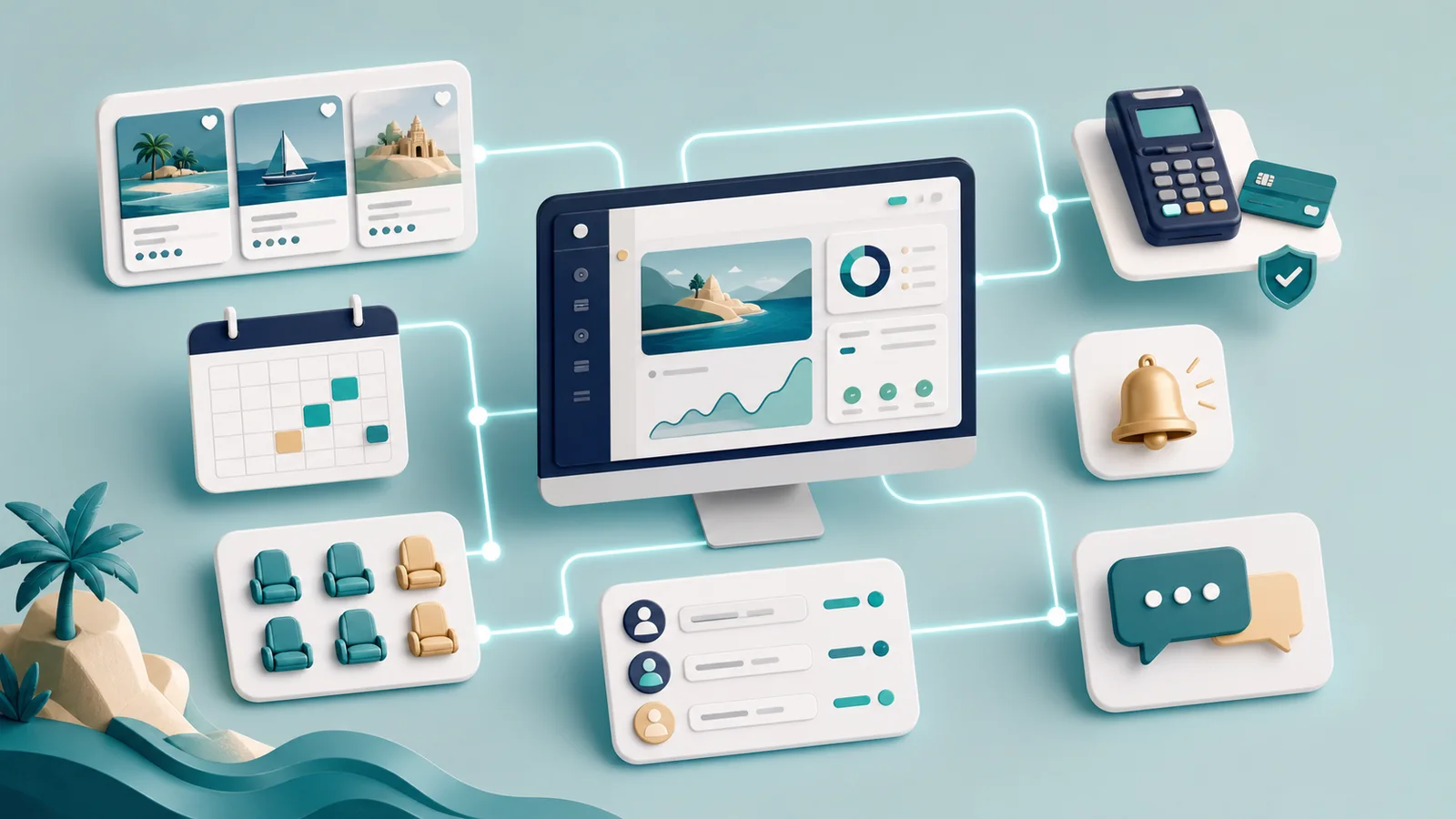
- Tour overview and details page: Supports images, highlights, daily program, prices, included/excluded items, documents, and terms and conditions.
- Package filter: For example, details such as destination, travel month, number of days, price, or trip type, to help people find options quickly.
- Flight schedule and available seats: Show only the actual sales rounds and prevent the display of old data.
- Inquiry or booking system: Collect traveler data according to the required levels, along with their status so that the team can follow up.
- Payment: We accept deposits or full payments according to company policy, and please provide clear documentation of the required documents.
- Measurement system: View lead sources, engagement lists, and conversions for each package.
Back-end tour package management system
What causes something to happen? Tour company website What truly matters is the backend system, where the team isn't afraid to modify data. A tour company's backend system should allow the team to add tours, set categories, set prices, and close fully booked tours without having to wait for someone to write code every time.
A package should include more than just the name and price.
Each package may have multiple travel dates, prices, room types, or conditions for children and adults. A good tour package system should therefore separate the main tour information from the information for each individual itinerary, allowing for changes to dates or prices specific to each itinerary without affecting other details, and also keeping a record of necessary changes.
New package creation team → Add travel dates and seat quota → Adjust price for specific dates → Customer books and pays deposit → System notifies team → Staff checks and confirms → Seat status and update report based on actual events.
Define user access rights based on function.
Package managers, sales teams, finance administrators, and management don't need to see or edit everything in the same way. A system with roles and audit logs helps reduce errors when changing prices, issuing refunds, or modifying booking statuses, especially for companies with multiple teams and branches.
Online tour booking and customer notification system.
Booking a tour doesn't always have to end with an immediate credit card payment. Many companies need to verify documents, check the number of travelers, or confirm seats before proceeding. Therefore, it's important to design booking statuses that accurately reflect actual operations, such as "awaiting deposit payment," "awaiting verification," "awaiting confirmation," or "confirmed." We offer tour booking system services. Therefore, it is necessary to discuss the exceptions and those responsible for each status from the beginning.
Let's start with the booking formats that businesses can handle.
Start-up businesses might use booking forms and have a team confirm later. Companies with clearly defined sales periods, readily available seating data, and a systematic payment process can expand further. We develop websites for online tour bookings. The ability to select travel dates, the number of travelers, and proceed on a single screen is the basis of... Tour package booking system This allows you to continuously check the status and notify the team.
A good reminder helps reduce the workload of following up with clients.
When a booking request is received, the system should notify the relevant parties and send a confirmation message to the customer acknowledging receipt of the information. Reminders regarding payment deadlines, required documents, or changes to the itinerary can then be sent as appropriate. However, the content and frequency should be appropriately managed to avoid making the customer feel harassed.
Payment receipts must be designed with exceptions in mind.
Besides the Payment page, you also need to consider deposits, remaining balances, discounts, cancellations, refunds, and proof of payment. If you need to integrate with a payment service provider, you should establish a status flow chart before development begins and explore alternative approaches. Payment Gateway Thailand In accordance with the company's payment method.
What types of tourism businesses is this suitable for?
action We create websites for the travel industry. It's adaptable from small companies offering niche trips to tour operators with multiple countries and sales teams. The key is not to use the same structure for everyone, as the sales methods and information customers need to consider differ.
Suitable for package listing pages, destination filters, travel schedules, and daily details.
Focus on the request for quotation form, collecting the number of people, date range, budget, and specific interests.
A portfolio with case studies and a clear communication path with the sales team is more important than an immediate purchase system.
How is creating a custom tour company website different from using a ready-made website builder?
A ready-made website can help you get started quickly if the tour structure, pricing, and booking format are close to what the system supports. However, when a business has many different course types, multiple branches, complex travel schedules, or needs to integrate with CRM/accounting/existing systems, the limitations of the template may cause the team to revert to using spreadsheets alongside the website.
Custom means designing based on workflow, not just changing the website colors.
action We create websites for tour packages. The custom approach starts by asking what data changes frequently, who approves prices, how seats are counted, and which system booking information needs to be forwarded to. Then, design the data model, user interface, and user access rights to suit the team's needs.
It's not necessary to customize everything.
Cost-effective projects often choose to use off-the-shelf standard components and then commission development for specific areas that differentiate their business, such as pricing methods, tour package systems, or data integration. You can read more about system integration in this article. How do APIs allow different systems to communicate with each other?
The process of getting a website created for a tour company.
- Record the requirements and review the existing workflow: Specify the tour type, original source, users, and repeat locations.
- Design the data structure and site map: Separate pages for main page, category page, package page, booking details page, and page for building trust.
- UX/UI Design: Start by searching for tours, viewing details, and submitting booking requests on your mobile device.
- Developing the front-end and back-end systems: Define permissions, manage packages, make reservations, provide notifications, and handle necessary connections.
- Tested with real data and cases: Includes cases for price changes, full payment, cancellations, deposits, and notifications.
- Training, activation, and measurement: Allow the team to update packages themselves, track leads, and adjust website pages based on information.
Frequently asked questions about creating a tour website.
Does a tour website need an online booking system from the start?
It's not always necessary. If the team still needs to verify seat availability or details before confirming, they could start with a booking request system that clearly records the status, and then gradually develop it to online confirmation and payment when the workflow is ready.
Can the tour team add their own packages?
Yes, if the backend system is designed to organize package information, travel dates, prices, and images, user permissions and editing scope should be clearly defined to ensure that publicly displayed information passes the company's verification process.
How long does it take to create a tour website?
Depending on the number of screens, data availability, and the systems required for connectivity, a website showcasing companies and basic packages will take less time than a system with real-time seating, multiple payment options, or internal system integrations. Therefore, it should be implemented in phases, with key components tested first.
What should you prepare before you begin?
Prepare a package list, images, schedule, pricing and terms, travel dates, company information, contact details, and examples of work you like. If you have an existing system, collect sample files or usage procedures. This will help the system design team match the project to the specific needs and clearly assess the scope.
Designing a tour website that is easy to sell and manage.
A good tour website provides customers with complete information to make informed decisions and enables the team to systematically update packages, receive bookings, and track sales. If you're starting out or want to upgrade your existing website, planning the workflow before selecting features is the most worthwhile approach.
The Creative Plus One team is ready to help analyze package structures, design websites, and develop booking systems that align with the travel company's workflow.