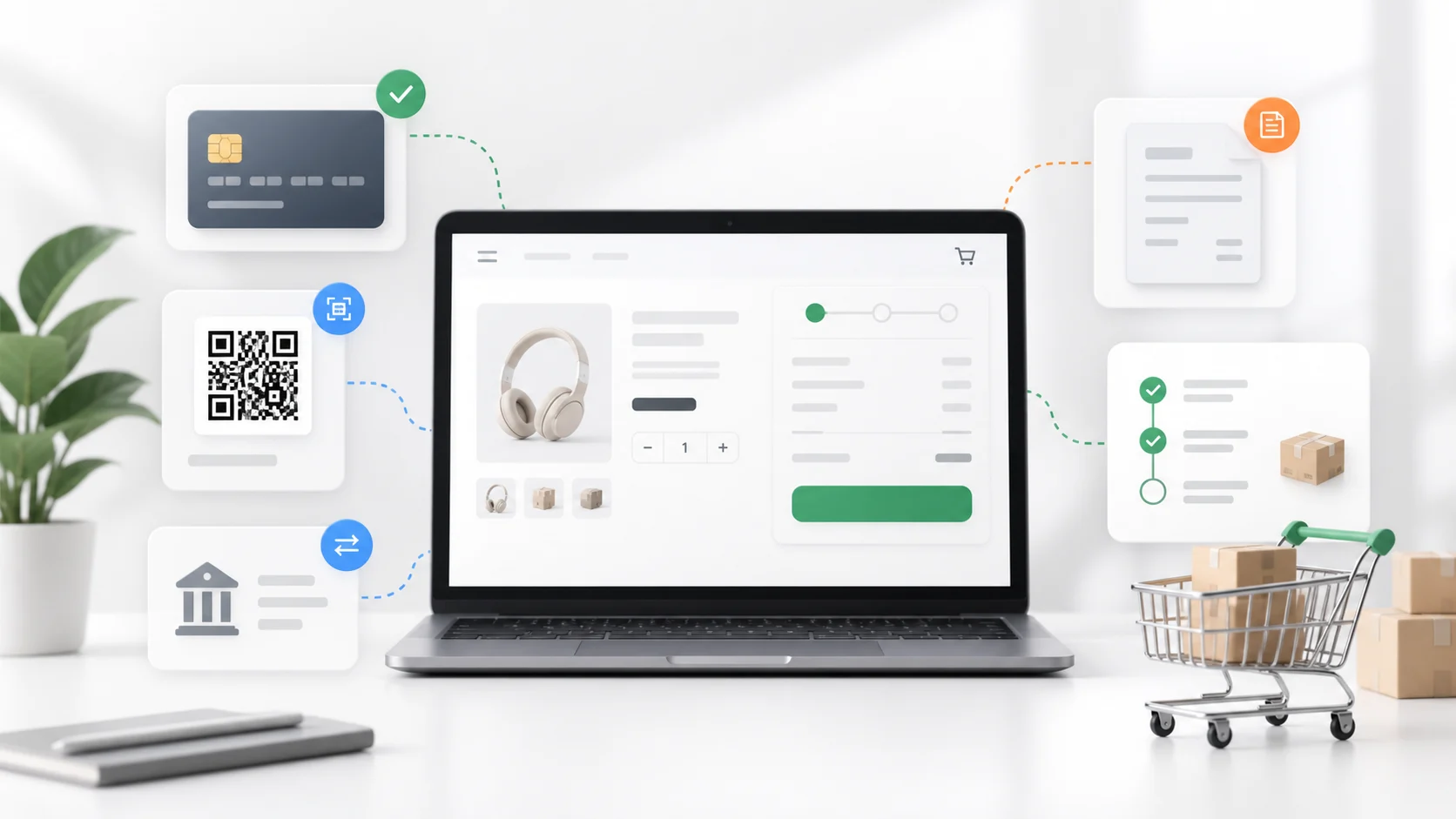
A website that accepts online payments isn't just about having a "pay button" and that's it. Behind the scenes, there are issues like shopping carts, orders, payment status, deposits, invoices, refunds, security, and documents that the payment gateway provider uses to approve the account.
What is a website with an online payment system?
A payment gateway is a website where customers can select products, services, packages, or courses and pay online instantly via methods such as credit cards, PromptPay, mobile banking, wallets, or installment plans. A backend system receives order confirmations from a payment gateway, making it easier for the website owner to manage orders.
Not all websites need to use the same system.
A typical online store might be sufficient with WooCommerce or Shopify, but websites with specific requirements, such as those involving deposits, reservations, membership access, or account integration, may need to implement an API. This article... API for E-Commerce This image is explained more clearly.
What is the starting price? Why are the prices different on each website?
The cost of developing a website with a payment system depends more on the complexity of the workflow than just the number of pages. For a standard store, the cost will cover website design, e-commerce system installation, payment gateway setup, and order testing. However, if API integration, CRM, ERP, or membership systems are required, the budget will increase according to the logic that needs to be developed.
Factors to consider before starting.
- Use WordPress/WooCommerce, Shopify, or custom development.
- Receive full payment, deposit, installments, or monthly payments.
- Do I need to issue receipts, tax invoices, or link my accounting system?
- How much back-end processing is needed to handle orders, refunds, reports, and notifications?
- The UX/UI checkout process needs to be aligned with the brand, or a standard page can be used.
The budget should also be considered in terms of system risk.
Payment systems deal directly with customer payments. If callbacks are configured incorrectly, statuses don't update, or duplicate payments aren't supported, the backend workload becomes significantly heavier. Therefore, the budget should include real-time testing time, not just the plugin installation cost.
Steps to create a website with an online payment system.
1. Plan the sales flow before choosing the tools.
Start by asking what the customer is paying for: a product, a service, a reservation, a course, or a membership? Then choose which option is best. WooCommerce, Shopify Or write your own system.
2. Prepare the website and application documents for Gateway.
Payment gateway providers typically verify business information, website details, products/services, refund policies, shipping policies, and contact information. Therefore, the website should appear credible before submitting documents, rather than applying first and then filling in information later.
3. Install, test, and activate.
After obtaining an account, you need to set up test/live key, webhook, order status, email, refund, and checkout flow on both mobile and desktop. Please refer to this article for guidance. Omise Payment Gateway service The service and installation details are already summarized.
How to choose a payment gateway and platform.
For Thai businesses, Omise, Stripe, and individual local service providers have different terms and conditions regarding payment methods, fees, transfer times, support for recurring payments, and platform integration. (Article) Payment Gateway Thailand 2026 Suitable for getting an overview before making a decision.
Continue reading in this series.
- Set up an online booking and payment system.
- Monthly subscription systems in Thailand.
- Make your website optimized with AI recommendations.
I want to create a website with a fully functional payment system.
Creative Plus One helps plan the sales flow, design websites, prepare payment gateway application documents, install WooCommerce or Shopify, and write APIs to integrate with the backend system, all with testing before launching for real-time sales.